
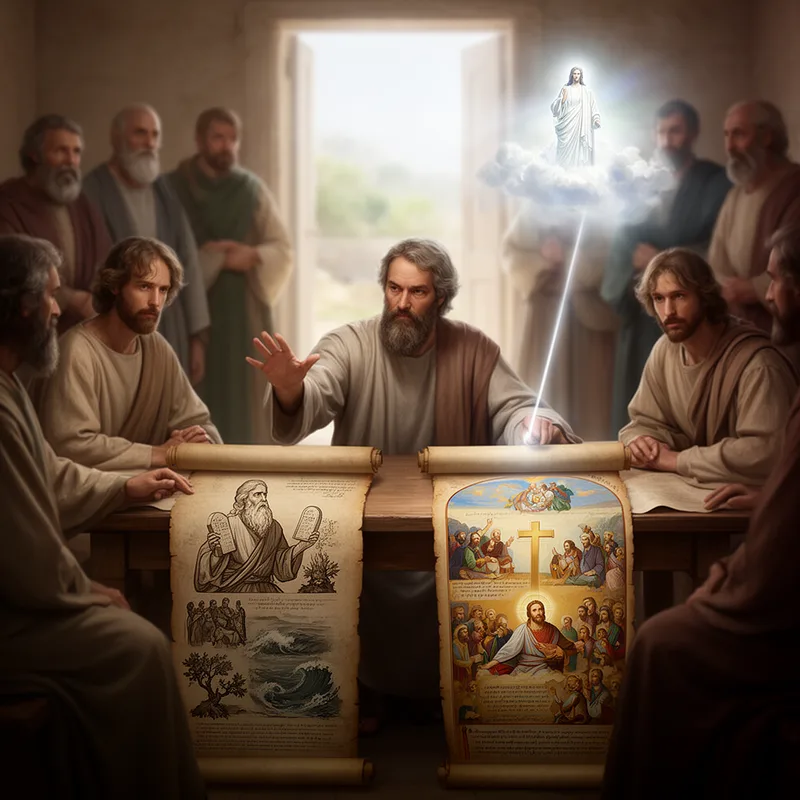
Marcionism


 1
9.9
- noun
- /ˈmɑrʃənˌɪzəm/
- Specialized
- The influential ideas of Marcionism sparked significant controversies among early Christian theologians.
Loading YouTube…
Watch on YouTubeAnd so we don't know to what degree Marcionism got a foothold in Alexandria or in the Egyptian context.
- And so we don't know to what degree Marcionism got a foothold in Alexandria or in the Egyptian context.
Examples
-
And so we don't know to what degree Marcionism got a foothold in Alexandria or in the Egyptian context.
-
In the early church, many debates centered around the teachings of Marcionism, which rejected the Old Testament.
-
Historians study Marcionism to understand how early Christians viewed the relationship between the Old and New Testaments.
Surface Forms
Morphology
Marcionism = Marcion (transparent) = Marcion + ism
Standard formation from a personal name plus the productive suffix '-ism' yielding 'the doctrine or system associated with Marcion.'
Etymology
Marcionism comes from the name Marcion, a 2nd-century Christian teacher who rejected the Old Testament and said God did not become a human in Jesus. The ending -ism means 'a system of beliefs', just like in Buddhism, so Marcionism is the belief system that follows Marcion's ideas.