
Mantispidae


 1
9.9
- noun
- /mænˈtɪspɪdi/
- Specialized
- Many entomologists study Mantispidae to learn about predatory behaviors among insect families.
Examples
-
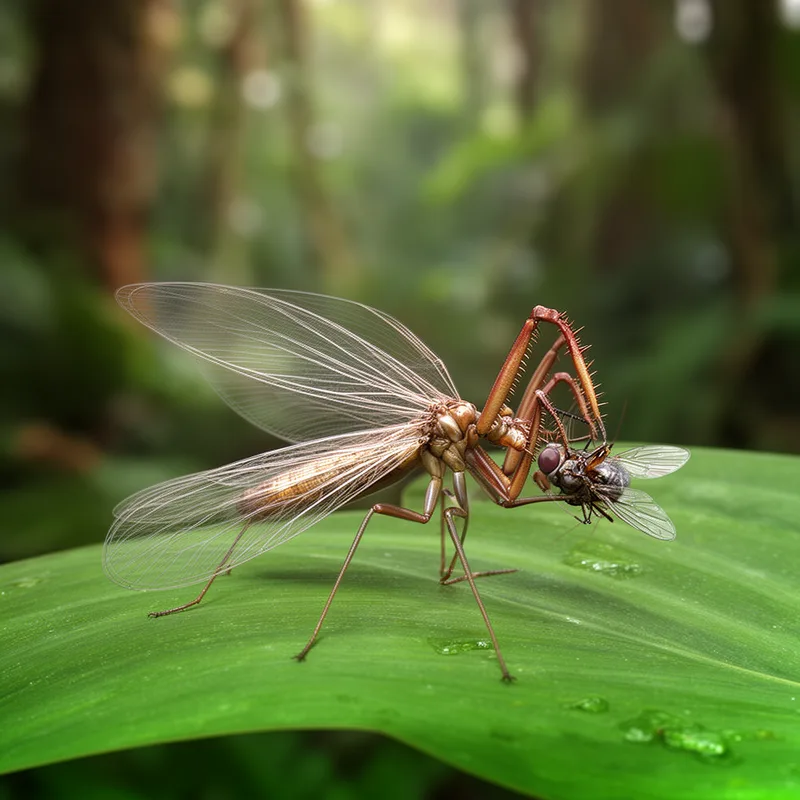
A specimen of Mantispidae was found in the rainforest, perched on a leaf.
-
The Mantispidae family includes fascinating predatory insects.
-
The Mantispidae are easily recognized by their mantis-like forelegs and delicate wings.
-
Did you know that Mantispidae are known for their unique hunting techniques?
-
The Mantispidae family includes insects that hunt for their prey using their specialized front legs.
-
In gardens, Mantispidae can be beneficial as they control populations of harmful pests.
-
Entomologists study Mantispidae to understand their unique hunting techniques and camouflage.
Surface Forms
Morphology
Mantispidae = mantispid (opaque) = mantisp + idae
The form is built with the specialist taxonomic suffix '-idae' to denote an animal family, a pattern unfamiliar to average learners and not transparently inferable from the stem.
Etymology
Mantispidae comes from mantis, as in the common 'praying mantis', plus the family ending -idae which means 'family' in animal names. So, Mantispidae are a family of mantis-like insects with front legs made for catching prey.