

Manichean
 1
9.9

- adjective
- /ˌmænɪˈkiːən/
- His Manichean worldview made it difficult for him to see nuance in political issues, as he believed everything was divided into good and evil.
Loading YouTube…
Watch on YouTubeSo this isn't to say that you, you know, split yourself off into, you know, good person, bad person in a very Manichean sort of way.
- So this isn't to say that you, you know, split yourself off into, you know, good person, bad person in a very Manichean sort of way.
Examples
-
So this isn't to say that you, you know, split yourself off into, you know, good person, bad person in a very Manichean sort of way.
-
In short, Americans have a profoundly Manichean way of viewing their interaction with the outside world and their confrontation with foreign adversaries.
Academic text (2013) -
Paradoxically, Romney's approach was more idealistic, with a largely Manichean understanding of the world and the role of the US.
Blog text (33) -
The unstated assumption, shared by the war's authors, was a deeply Manichean sense of political life: a clearly demarcated world of good and evil.
Academic text (2013) -
The author's Manichean approach to storytelling emphasized the stark contrast between the hero and the villain in the narrative.
-
In discussions about morality, she often exhibited a Manichean perspective, viewing actions as either wholly right or wrong.
Synonyms
 1
9.9
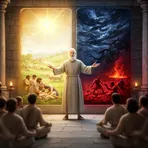
Relating to an ancient religion that teaches the world has two opposite forces, good and evil

 1
9.9
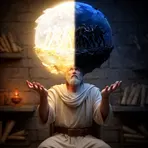
Relating to an ancient belief that the world is a struggle between light and darkness
Surface Forms
Morphology
Manichean = Manichaeism (transparent) = Maniche + an
Formed by the productive adjectival suffix '-an' attached to the name of the religion, so a learner knowing 'Manichaeism' can infer the adjective.
Etymology
Manichean comes from the name Mani and his religion Manichaeism, which taught that the world is divided into two opposite forces, 'good' and 'evil'. So calling an idea Manichean means it sees things as only two clear sides, like light versus dark.