
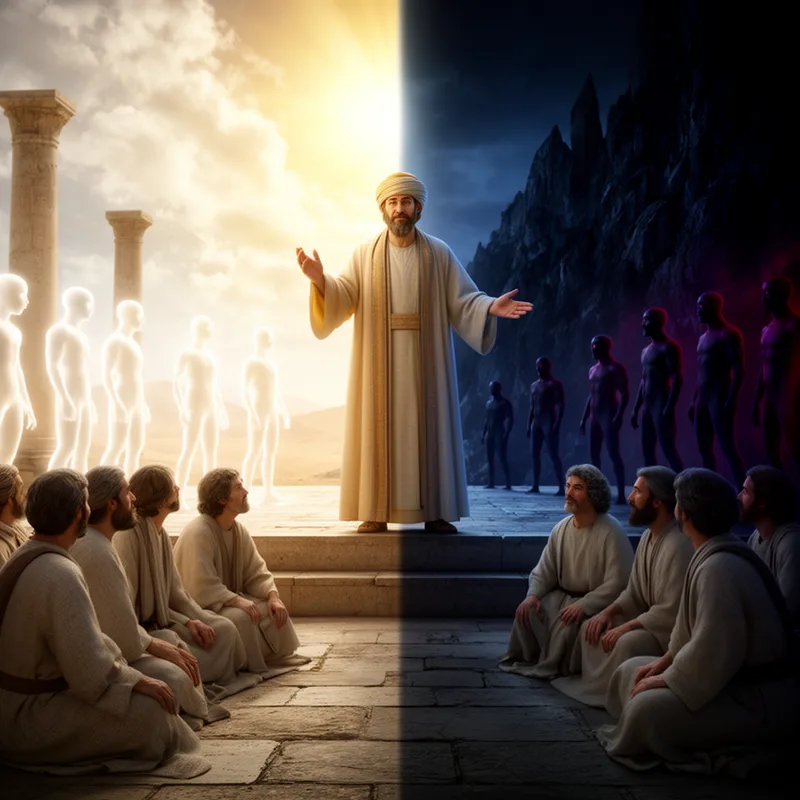
Manichaeanism
- noun
- /ˌmænɪˈkiːənɪzəm/
- Specialized
- The ancient religion of Manichaeanism was founded by the prophet Mani.
Examples
-
The dualism of light and darkness is central to the teachings of Manichaeanism.
-
Scholars study Manichaeanism to understand its impact on early Christian thought.
-
Manichaeanism spread from Persia to the Roman Empire and influenced later religious movements.
-
Many scholars study Manichaeanism to understand its dualistic beliefs.
-
The dualism of light and darkness is central to the teachings of Manichaeanism.
-
Scholars study Manichaeanism to understand its impact on early Christian thought.
-
Manichaeanism spread from Persia to the Roman Empire and influenced later religious movements.
Synonyms



 1
9.9
An ancient religion that teaches a struggle between light and darkness
Surface Forms
Morphology
Manichaeanism = Manichaean (transparent) = Manichaean + ism
Formed by the adjective 'Manichaean' plus the productive noun-forming suffix '-ism', yielding a doctrine/tendency meaning that is recoverable.
Etymology
Manichaeanism comes from the name Mani, a third-century teacher who said the world was a fight between 'light' and 'darkness', and the ending -ism which means 'a belief' (as in Buddhism). So Manichaeanism is literally the 'belief of Mani' and is known for its strong idea of two opposite forces.