
Manichaean


 1
9.9
- noun
- /ˌmænɪˈkiːən/
- Specialized
- He is first a Platonist, sort of, then a Manichaean, then a Christian Platonist, and then a more fervent Christian.
Loading YouTube…
Watch on YouTubeAnd it's developed more as response to heretics, Gnostics, Manichaeans.
- And it's developed more as response to heretics, Gnostics, Manichaeans.
- He is first a Platonist, sort of, then a Manichaean, then a Christian Platonist, and then a more fervent Christian.
- He targets the Manichaeans, who are a very popular group at his time, a church that he actually belonged to.
Examples
-
He targets the Manichaeans, who are a very popular group at his time, a church that he actually belonged to.
-
Despite the best efforts of Augustine, himself a lapsed Manichaean, the doctrine was not entirely eradicated, and when it resurfaced in the eleventh century with the steak-spurning Bogomils, many were in fact burned at the stake.
Academic text (2000) -
Many scholars consider Mani, the founder of Manichaeanism, to be one of the most influential religious figures of his time.
-
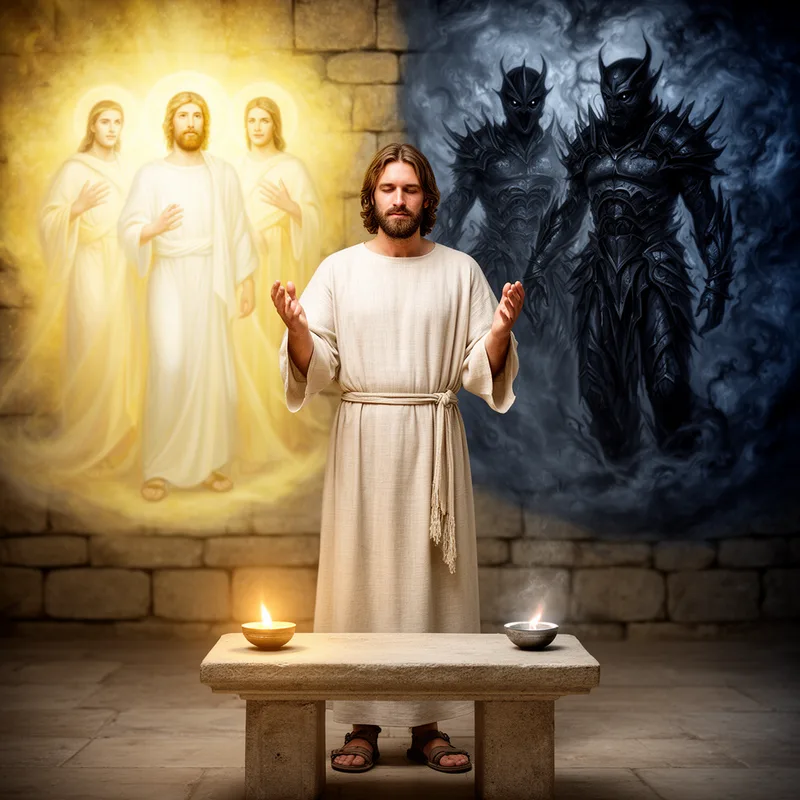
As a Manichaean, he believed that life is a constant battle between good and evil forces.
-
In conversations about religious beliefs, you may encounter someone who identifies as a Manichaean, emphasizing the dichotomy of good versus evil.
Synonyms
 1
9.9
A person who believes the world is divided into good and evil
 1
9.9
A person who follows an ancient religion that says the world is a struggle between light and darkness
Surface Forms
Morphology
Manichaean = Manichaeism (transparent) = manichae + ean
The agent/noun sense is formed regularly from the religion name using the adjectival/denominal suffix, so the relation is direct.
Etymology
Manichaean is a follower of Mani, the prophet who taught that life is a fight between 'good' and 'evil'. So a Manichaean believed in a clear, simple split between the two sides.