
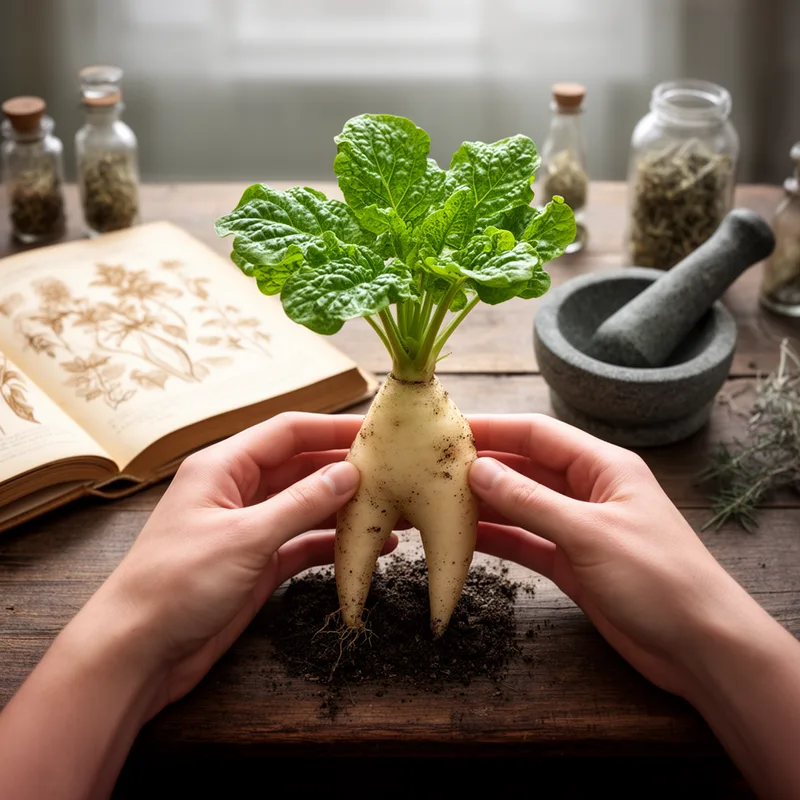
Mandragora
 1
9.9
1
9.9

- noun
- /mænˈdreɪɡərə/
- Specialized
- Not poppy, nor mandragora... ...nor all the drowsy syrups of the world... ...shall ever medicine thee to that sweet sleep... ...which thou owedst yesterday.
Examples
-
- Get me to drink mandragora.
-
In a letter to his wife, Hamsun confirms the centrality of love by mentioning a poem about mandragora that introduces the play:
Academic text (1998) -
Give me to drink mandragora.
-
Mandrake, or mandragora, is used to return those who have been petrified to their original state.
-
Did you also know that in the 1200s, in many places, including Britain and Byzantium, they were pretty good at anesthetizing a patient with mandragora, henbane, and opium?
Academic text (2008) -
In traditional medicine, mandragora is often mentioned for its potential healing properties.
-
Herbalists frequently use mandragora in their concoctions for various ailments.
-
The legend says that mandragora has magical powers and can bring good luck.
Synonyms
 1
9.9
1
9.9
A plant with purple or white flowers and a forked root believed to have magical powers

A plant with purple flowers and a forked root thought to be magical and used as medicine
Compounds
- Specialized
A plant with purple flowers and a forked root thought to be magical and used as medicine
Surface Forms
Etymology
Mandragora comes from an old Greek name mandragoras, and it is the same plant you know as the English mandrake. People once thought the thick root looked like a small human and held 'magic' and 'healing' power, which is why the name is tied to both folk stories and medicine.