
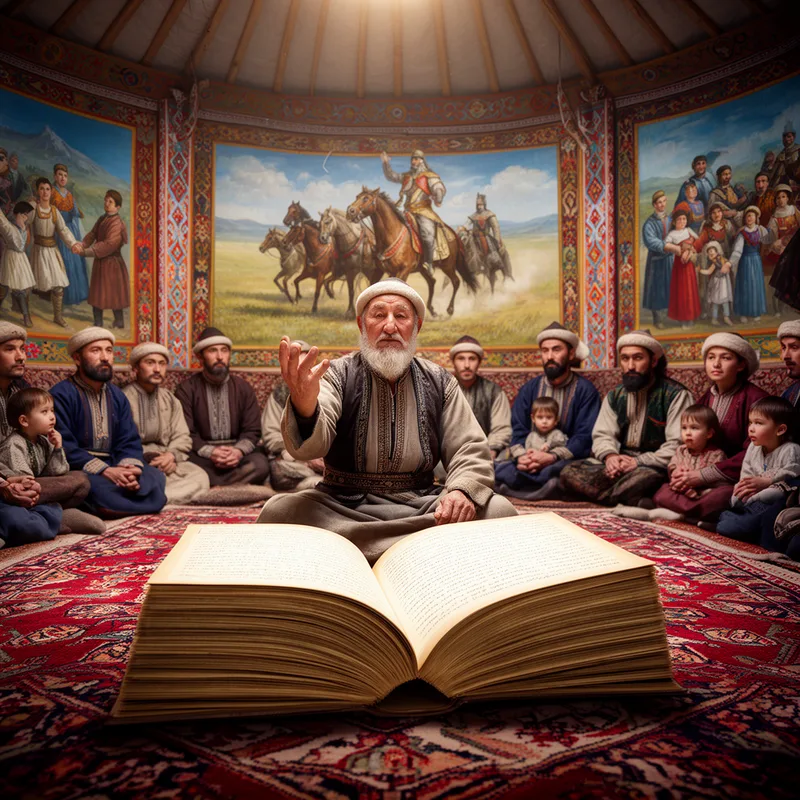
Manas


 1
9.9
- proper noun
- Literature
- The initial poem in the cycle tells of the birth, the childhood exploits, the mature achievements (particularly on the battlefield), and the death of Manas himself.
- Manas epic
Examples
-
For instance, Kyrgyz state support of the public display and study of the Kyrgyz epic poem, the Manas, does not appear to exclude non-Kyrgyz members of society.
Academic text (2000) -
The Manas epic has been in circulation for at least 500 years and perhaps for some centuries longer.
Academic text (2016) -
If Manas is little known in the West, this is even more true of these other two epics in the cycle.
Academic text (2016) -
Reichl's special topic is the evolving forms and uses of the Manas epic in the midst of changing political, social, and artistic circumstances in twenty-first-century Kyrgyzstan.
Academic text (2016) -
Likewise, the other three essays in this collection testify to the vitality of the singing tradition of the Manas and Gesar epics in the recent and contemporary world.
Academic text (2016) -
While the title Manas is used with general reference to epic verse relating to this hero, strictly speaking, the title refers to the first part of a three-part cycle. Two sequel epics, Semetey and Seytek, tell of the hero's son and grandson, respectively.
Academic text (2016) -
The Manas epic is considered the pinnacle of Kyrgyz literature, celebrating the heroism of its central figure.
-
Scholars study the Manas to understand the cultural values and history of the Kyrgyz people.
-
In performances, the Manas is recited with great passion, showcasing the artistry of traditional storytelling.
Surface Forms
Etymology
Manas (the epic) is the name of a great Kyrgyz hero, and the long traditional poem is named after him because it tells his 'heroic deeds' and the stories of his people.