
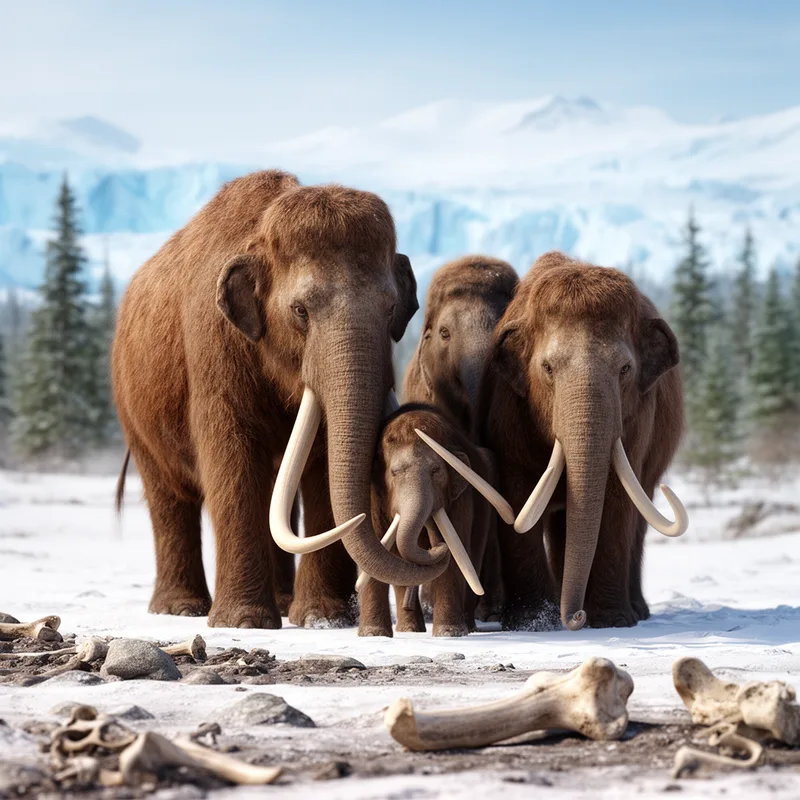
Mammutidae


 1
9.9
- noun
- /ˌmæməˈtuːdeɪ/
- Specialized
- Fossils of Mammutidae have helped scientists understand more about prehistoric proboscideans.
Examples
-
The Mammutidae family includes the famous mastodon.
-
Unlike mammoths, the teeth of Mammutidae were adapted for browsing rather than grazing.
-
The Mammutidae roamed North America and Eurasia before becoming extinct at the end of the Ice Age.
-
Scientists study Mammutidae fossils to learn about prehistoric life.
-
Mammutidae is known for its distinct, large tusks and bulky bodies, characteristics that set Mammutidae apart from modern elephants.
-
Fossil remains of Mammutidae have been discovered in various locations, providing insight into their prehistoric habitat.
-
The study of Mammutidae helps scientists understand the evolution of large herbivores during the Miocene to Pleistocene epochs.
Synonyms
A group of large extinct animals like elephants that lived until the last ice age
Surface Forms
Morphology
Mammutidae = Mammut (semi-transparent) = Mammut + idae
Formed regularly from the genus name 'Mammut' plus the zoological family suffix '-idae'; clear to those familiar with taxonomy but requires specialized knowledge for typical learners.
Etymology
Mammutidae comes from the name Mammut, the same root behind the word mammoth, which came into European languages from a Siberian word for very large animals found in the ground. The ending -idae means 'a group of animals', so Mammutidae names the family of those large, extinct mastodon-like animals.