
Mammalia
 1
4.6

- noun
- /məˈmeɪliə/
- Specialized
- I knew that Linnaeus had invented the term Mammalia for our vertebrate class in his Systema Naturae of 1758, but I thought that he had simply promoted an old vernacular word.
Examples
-
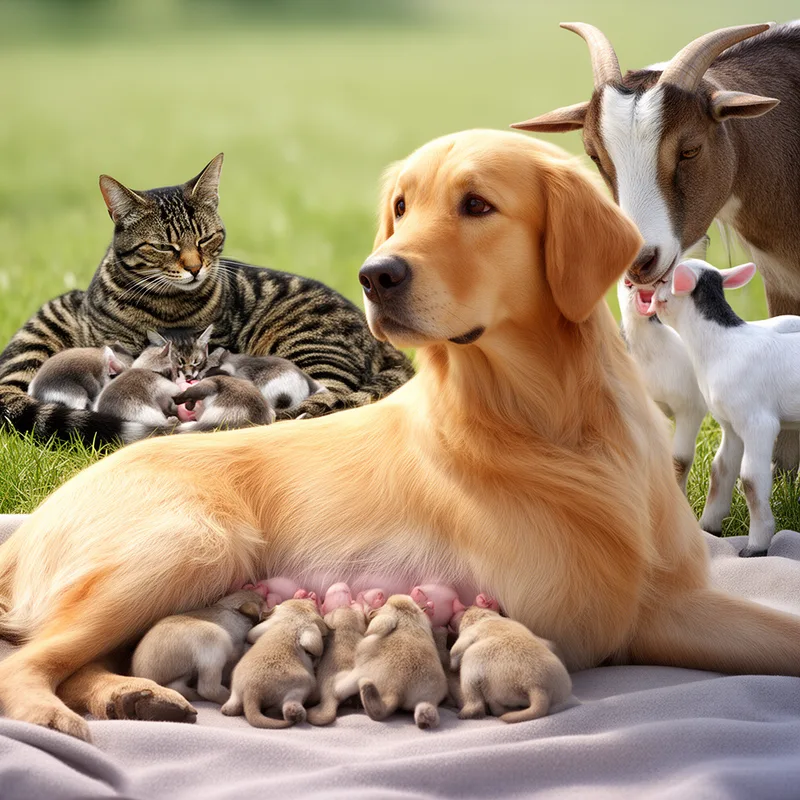
Dogs, cats, and humans all belong to the class Mammalia, known for their ability to produce milk.
-
The class Mammalia includes a wide variety of animals, from tiny mice to large whales.
-
Now just to sort of put that in perspective, we're in the class Mammalia, right?
-
I am led to regard the genus Homo as not merely a representative of a distinct order, but of a distinct subclass of the Mammalia.
Academic text (1995) -
Many creatures in the class Mammalia, such as elephants and whales, are essential to their ecosystems.
Synonyms
 128
1.0
An animal that keeps its body warm, has hair, and whose mothers feed their young with milk
Surface Forms
Etymology
The word Mammalia comes from the Latin root mamma, meaning 'breast'. Think of a mother feeding her baby with milk, and you see why Mammalia are the animals whose females make milk for their young.