

Malus sylvestris
- noun
- Specialized
- Botanists have long studied Malus sylvestris as a key ancestor of cultivated apple trees.
Examples
-
The hedgerows of Europe are often dotted with Malus sylvestris in the spring, covered in delicate blossoms.
-
Wildlife relies on the fruit of Malus sylvestris for food during the autumn months.
-
The Malus sylvestris tree produces small, tart apples.
-
Can you identify Malus sylvestris in the wild?
-
The hedgerows of Europe are often dotted with Malus sylvestris in the spring, covered in delicate blossoms.
-
Wildlife relies on the fruit of Malus sylvestris for food during the autumn months.
-
Botanists have long studied Malus sylvestris as a key ancestor of cultivated apple trees.
Synonyms
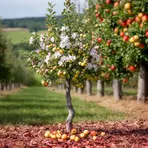
A small apple tree from Europe that is a main ancestor of the apples we grow
Surface Forms
Morphology
Malus + sylvestris
This is a Latin binomial (scientific) name rather than a normal English phrase; its meaning depends on taxonomic/Latin knowledge rather than transparent English word composition. The second element 'sylvestris' is not provided as an English word here and the overall label is a technical species name, so a B1 learner who only knows ordinary English constituents would not reliably derive the meaning.
Etymology
Malus sylvestris is a Latin name that comes from Malus meaning 'apple' and sylvestris meaning 'of the woods' or 'wild'. So the name simply means 'wild apple', which helps explain why it refers to the wild crab apple that is a wild ancestor of our garden apples.

