
Malacosoma disstria
- noun
- Specialized
- Large outbreaks of Malacosoma disstria can cause significant damage to hardwood forests.
Examples
-
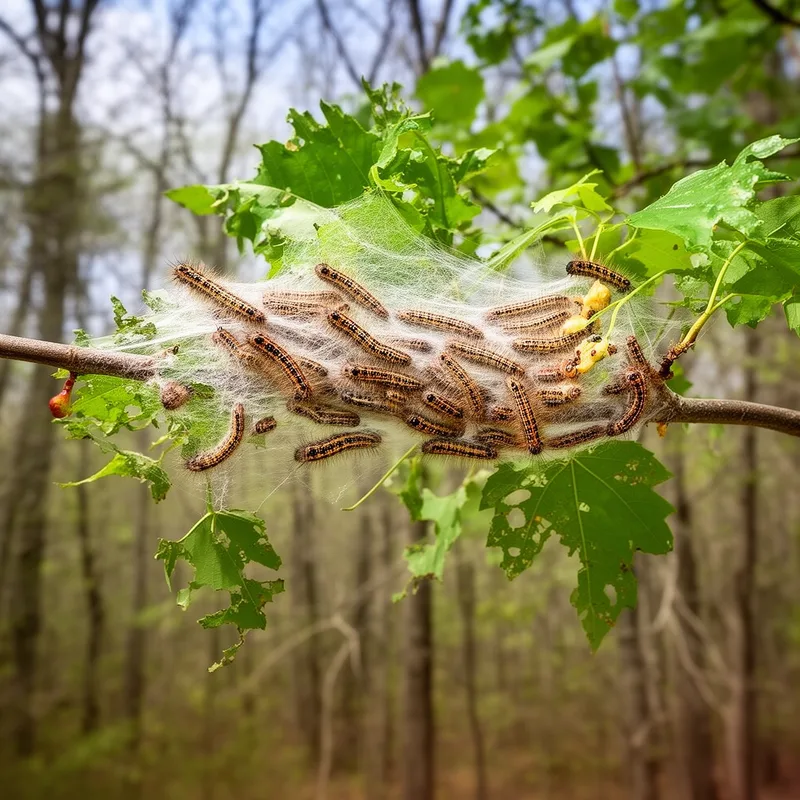
The larvae of Malacosoma disstria are known for spinning mats rather than true tents.
-
Scientists are studying methods to control Malacosoma disstria infestations in maple and aspen trees.
-
The Malacosoma disstria is commonly found in North American forests.
-
Have you seen a Malacosoma disstria in the park?
-
During summer, the larvae of Malacosoma disstria can be seen spinning silk mats in the trees.
-
When trees are infested by Malacosoma disstria, they often suffer from leaf damage.
-
The presence of Malacosoma disstria in a forest can indicate a potential ecological imbalance.
Surface Forms
Morphology
Malacosoma + disstria
This is a technical binomial (Latin) species name: even if a learner knows 'Malacosoma' as a genus of moths, the second element 'disstria' is not an English lexical item and provides no transparent cue. Scientific names act as proper nouns or labels rather than compositional phrases, so their specific meaning cannot be derived by a B1 learner from the constituents.
Etymology
Malacosoma disstria may come from Greek word parts malaco- meaning 'soft' and -soma meaning 'body', which gives a clear picture of the soft caterpillars that live together and spin silk mats on tree branches. That's why the name fits a North American moth whose larvae, called forest tent caterpillars, gather in groups and can eat many leaves, sometimes damaging forests.

