
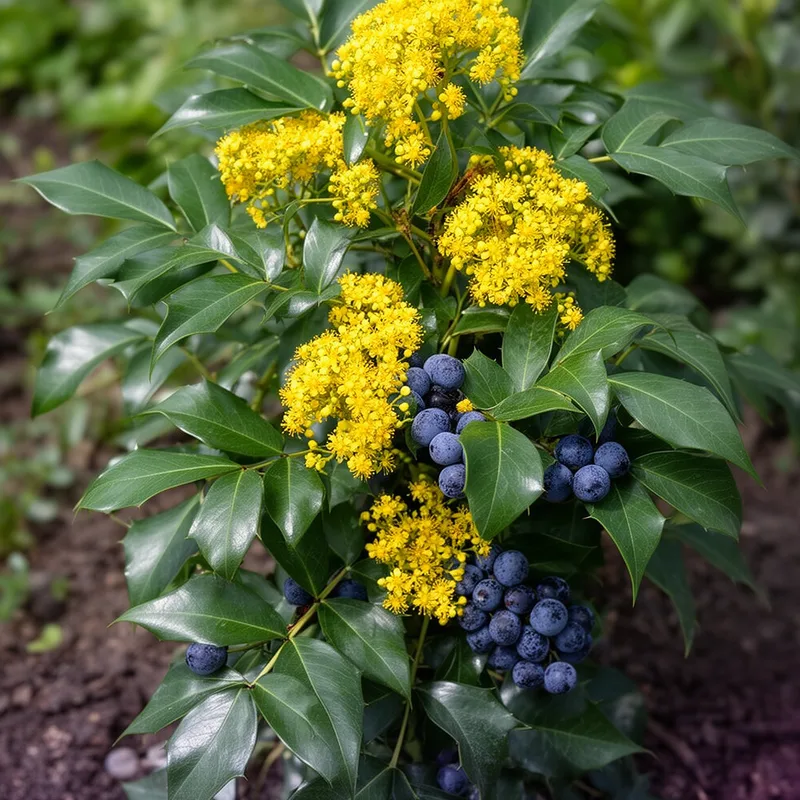
Mahonia aquifolium
- noun
- /məˈhoʊniə ˌækwɪˈfoʊliəm/
- Specialized
- The garden boasts several Mahonia aquifolium shrubs, prized for their attractive foliage and vibrant yellow flowers.
Examples
-
The blue-black berries of Mahonia aquifolium can be used to make jams and jellies.
-
The Mahonia aquifolium thrives in shaded areas of the garden.
-
In spring, the Mahonia aquifolium produces clusters of bright yellow blossoms that attract bees.
-
I planted a Mahonia aquifolium last spring.
-
In spring, the Mahonia aquifolium produces clusters of bright yellow blossoms that attract bees.
-
The blue-black berries of Mahonia aquifolium can be used to make jams and jellies.
-
The garden boasts several Mahonia aquifolium shrubs, prized for their attractive foliage and vibrant yellow flowers.
Synonyms
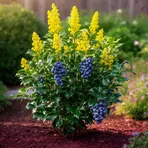
An evergreen shrub with dark green divided leaves, yellow flower clusters, and blue-black berries often grown in gardens

An evergreen garden shrub that has shiny divided leaves, yellow flowers, and dark blue berries
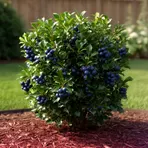
A small garden bush with dark green leaves and blue-black berries

A low bush with dark green leaves that stay all year and blue-black berries

A small evergreen bush with spiny leaves, yellow flowers, and blue-black berries
Surface Forms
Morphology
Mahonia + aquifolium
This is a Latin botanical binomial (genus + species) rather than a compositional English phrase; the specific epithet 'aquifolium' is not an ordinary English word and gives no transparent information to a B1 learner. Even if the learner knows 'Mahonia' as a shrub, the full descriptive meaning (native range, flowers, berries, ornamental use) cannot be derived from the parts, so the expression is not predictable from its constituents.
Etymology
Mahonia aquifolium may be named for the gardener Mahonia, Bernard McMahon, and the Latin word aquifolium, which means 'holly-leaved'. So the name gives a clear picture: a shrub with sharp, holly-like leaves, bright yellow flowers, and dark berries.

