
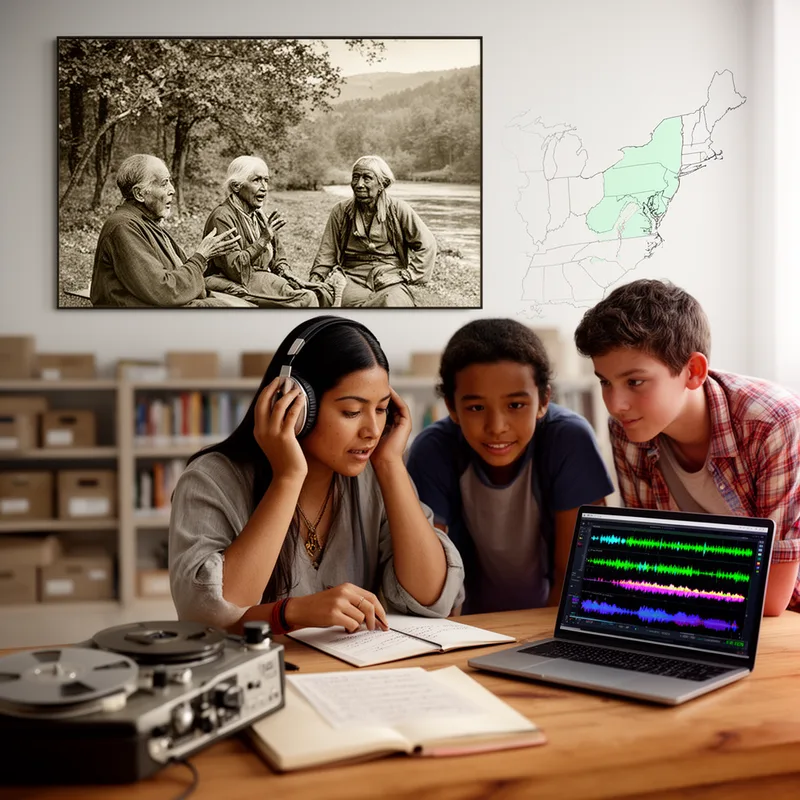
Mahican language
- noun
- The last fluent speakers of the Mahican language lived in the early 20th century.
Examples
-
The Mahican language was once widely spoken in the region.
-
Efforts are underway to revive some words from the Mahican language for educational projects.
-
Linguists have studied the Mahican language to learn more about Northeast native cultures.
-
Many resources about the Mahican language are available online.
-
Efforts are underway to revive some words from the Mahican language for educational projects.
-
Linguists have studied the Mahican language to learn more about Northeast native cultures.
-
The last fluent speakers of the Mahican language lived in the early 20th century.
Synonyms



 1
9.9
A language once spoken by a Native American group that lived along the Hudson River
A Native American language once spoken by the Mohican people in the northeastern United States
The language of a Native American group from the northeastern United States
Surface Forms
Morphology
The phrase 'Mahican language' is fully compositional: 'Mahican' identifies the people/ethnic group and 'language' denotes their speech system, so together it means 'the language of the Mahican people.' The pattern X + 'language' to name a community's tongue is a common and cross-linguistic naming convention, so a B1 learner who knows both constituents can reliably infer the meaning.
Etymology
Mahican language comes from the name of the Mahican people, a Native group who lived by the Hudson River in what is now the northeastern United States. It means the 'language' those people spoke, so today the phrase refers to their speech, which is no longer spoken.