
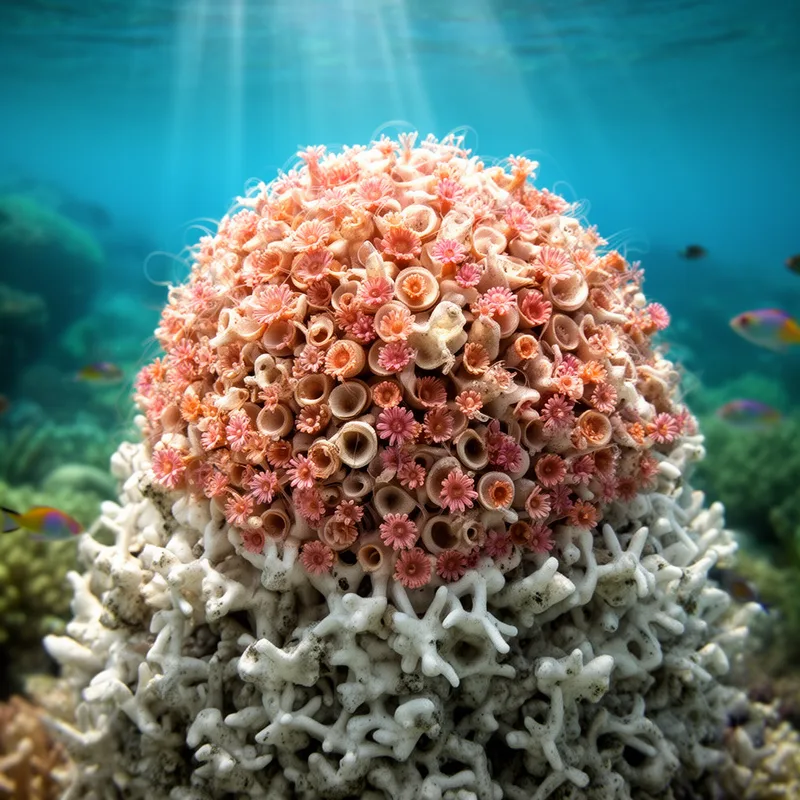
Madreporaria
- noun
- /ˌmædrəˈpɔːrəriə/
- Archaic
- Scientists study Madreporaria to better understand how coral reefs develop and support marine biodiversity.
Examples
-
The Great Barrier Reef is largely composed of various species within the Madreporaria order.
-
Climate change poses a significant threat to the survival of Madreporaria around the world.
-
The Madreporaria are essential for coral reef ecosystems.
-
Did you know that Madreporaria can live for hundreds of years?
-
Scientists study Madreporaria to better understand how coral reefs develop and support marine biodiversity.
-
The Great Barrier Reef is largely composed of various species within the Madreporaria order.
-
Climate change poses a significant threat to the survival of Madreporaria around the world.
Synonyms


 1
6.0
A sea animal that makes a hard skeleton and builds reefs
 1
9.9
A hard coral that builds reefs and islands
A group of hard corals that make the rock-like parts of reefs

A sea animal with a hard, white skeleton that builds reefs and islands
Compounds
Surface Forms
Etymology
Madreporaria comes from the parts madre 'mother' and porus 'pore', so imagine a 'mother rock' full of little holes. That's why Madreporaria refers to the stony corals made of many tiny animals living in holes and building the hard parts of coral reefs.