
Macrophomina phaseolina


 1
9.9
- noun
- Specialized
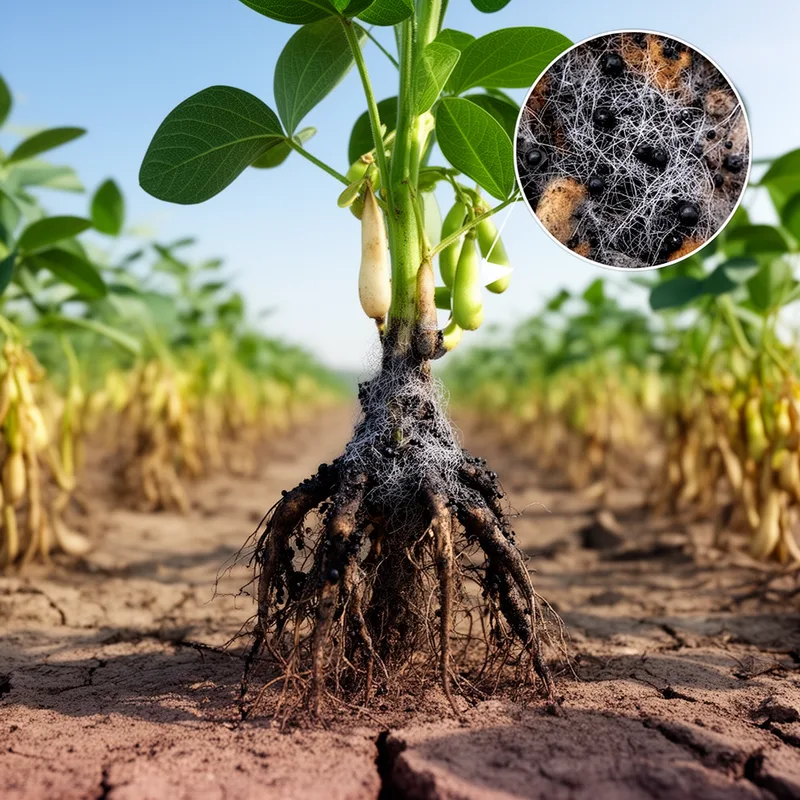
- Symptoms of Macrophomina phaseolina infection include blackened stems and sudden wilting in hot, dry conditions.
Examples
-
The spread of Macrophomina phaseolina in the field led to significant losses in the soybean crop.
-
Researchers are developing new methods to control Macrophomina phaseolina and protect vulnerable plants.
-
The plant was affected by Macrophomina phaseolina.
-
Farmers need to be aware of Macrophomina phaseolina.
-
The spread of Macrophomina phaseolina in the field led to significant losses in the soybean crop.
-
Researchers are developing new methods to control Macrophomina phaseolina and protect vulnerable plants.
-
Symptoms of Macrophomina phaseolina infection include blackened stems and sudden wilting in hot, dry conditions.
Surface Forms
Morphology
Macrophomina + phaseolina
This is a Latin binomial scientific name composed of non-English/technical morphemes that a B1 learner would not recognize as meaningful English constituents, so the sense 'a plant-pathogenic fungus' cannot be derived from the parts. Although the same name appears across languages in scientific contexts, it functions as an arbitrary technical label rather than a compositional English phrase, making it opaque to learners who only know ordinary English vocabulary.
Etymology
Macrophomina phaseolina may come from Greek and Latin parts: macro meaning 'large' and phaseolina referring to 'beans', because the fungus was often found on bean plants. So the name helps remember that it is a fungus that causes disease on beans and other crops.