

Macrodactylus subspinosus
- noun
- Specialized
- The larvae of Macrodactylus subspinosus can cause significant damage to plant roots in gardens.
Examples
-
Gardeners often recognize Macrodactylus subspinosus by its yellowish body and affinity for rose bushes.
-
Researchers studied how Macrodactylus subspinosus populations respond to different pest control methods.
-
The Macrodactylus subspinosus is commonly found in gardens.
-
Have you seen a Macrodactylus subspinosus on your plants?
-
Gardeners often recognize Macrodactylus subspinosus by its yellowish body and its tendency to feed on the leaves of rose bushes.
-
The larvae of Macrodactylus subspinosus feed on plant roots and can cause significant damage in gardens if not managed.
-
In many regions, Macrodactylus subspinosus is seen as a common pest among apple trees and grape vines.
Synonyms


 1
7.3
1
7.3
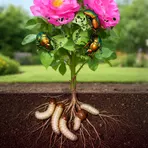
A common North American beetle whose young live on roots and adults eat leaves and flowers
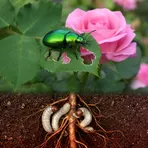
A small shiny green beetle whose young eat roots and adults eat leaves and flowers
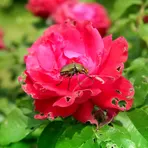
A small insect that eats the leaves and flowers of roses
Surface Forms
Morphology
Macrodactylus + subspinosus
This is a scientific Latin binomial functioning as a proper name for a beetle species rather than a compositional English phrase; its meaning (‘a species of North American beetle’) cannot be derived from the given constituents, and one constituent ('subspinosus') is not even defined. Even if the elements had recognizable Latin morphemes, an average B1 learner who knows the listed words would not reliably infer the species meaning, so the expression must be learned as a label.
Etymology
Macrodactylus subspinosus is a scientific name made from old Latin parts: macro 'large', dactylus 'finger', and subspinosus 'somewhat spiny'. This creates a simple picture of a yellow garden beetle with long, finger-like legs and small spines, which helps you remember it is the beetle that eats leaves, flowers, and roots.