
Macanese


 1
7.5
- adjective
- /ˌmækəˈniːz/
- Like the students, many members of the Macanese elite, especially the middle-ranking civil servants, actively influenced both Portuguese and Chinese government policies.
- Macanese elite
- Macanese masses
Examples
-
The Macanese elites and masses tended to have a participant political culture, whereas the Chinese elites and masses displayed a relatively parochial orientation.
Academic text (1990) -
An ADIM candidate defeated an opponent from another joint Portuguese and Macanese political group known as the Centro Democrático de Macau.
Academic text (1990) -
How can the Macanese rule Macau if, without interference from Beijing, gangs challenge the government with crime and disorder?
Academic text (1999) -
The Portuguese and Macanese masses in Macau have also participated actively in elections since the military coup in Portugal in April 1974.
Academic text (1990) -
Portuguese and Macanese elites and masses in Macau retained a participatory political culture after the Second World War.
Academic text (1990) -
24. In Macau, the upper class is dominated by local Chinese capitalists, big businessmen, and Macanese barristers.
Academic text (1990) -
The active participatory behavior of Macanese elites and masses and the relative political apathy of the Chinese masses reflected the existence of two types of political culture in Macau before 1984.
Academic text (1990) -
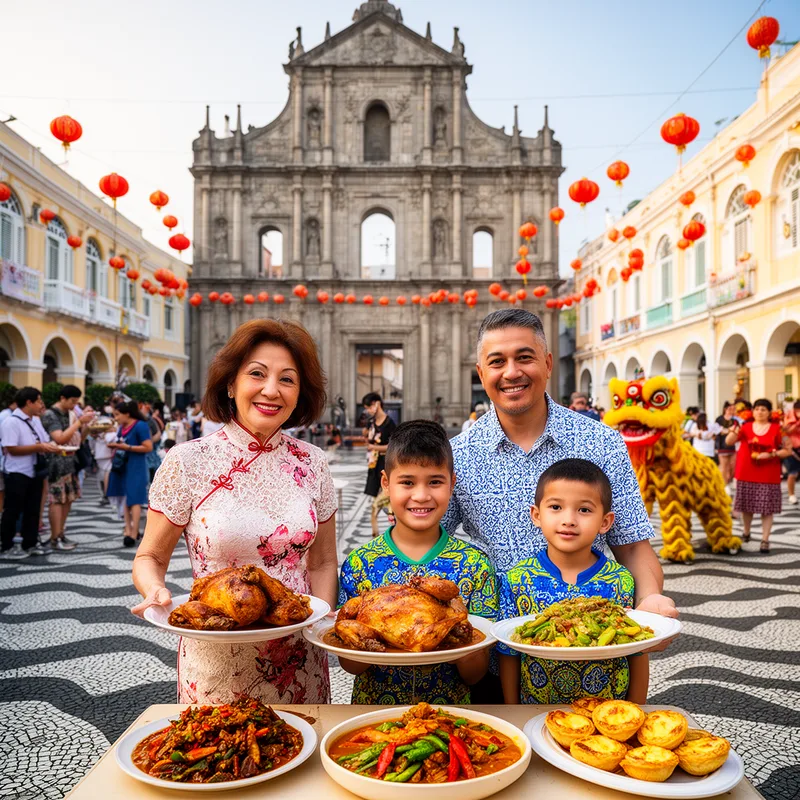
The traditional Macanese festival celebrates the unique blend of cultures in Macau.
-
She prepared a Macanese dish for dinner, highlighting the region's rich culinary heritage.
-
Many Macanese people proudly share stories about their mixed Portuguese and Chinese ancestry.
Surface Forms
Morphology
Etymology
Macanese comes from the place name Macau plus the ending -ese, which means 'from' or 'of', the same ending in Chinese and Japanese. So Macanese simply means 'from Macau' or 'relating to Macau'.