
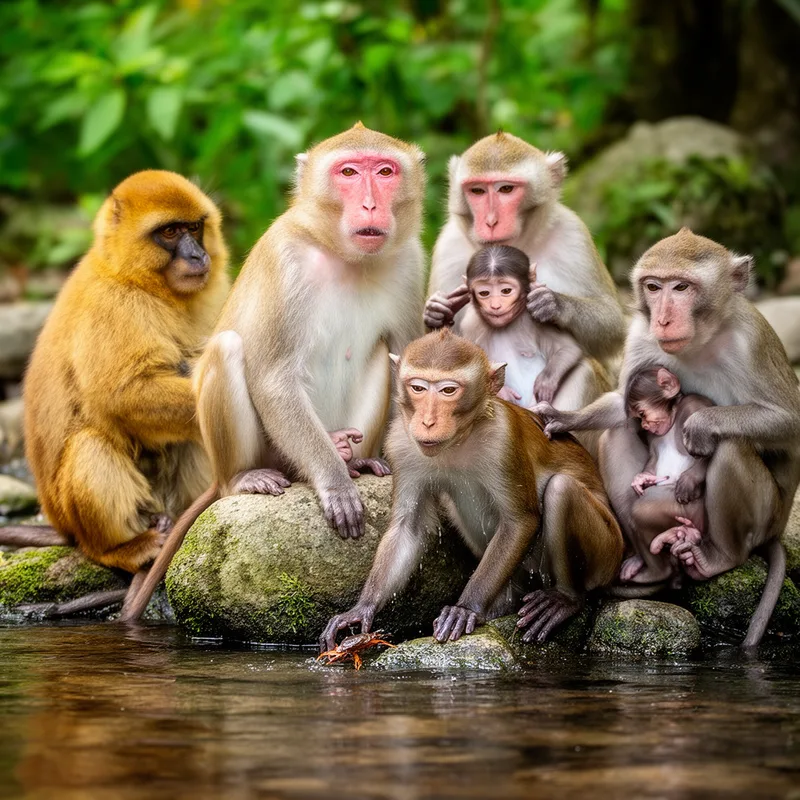
Macaca
 2
9.0
2
9.0

- noun
- /məˈkɑːkə/
- Specialized
- The most significant species occurring here are the Rhesus Macaque (Macaca mulatta) and the Long-tailed Macaque (Macaca fascicularis).
- Macaca macaque
- Macaca mulatta
Examples
-
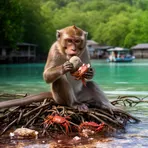
Other species, such as the crab-eating macaque (Macaca fascicularis), have no problem surviving in a beach habitat.
Academic text (1995) -
Researchers studied the behavior of Macaca species to learn more about their social structures.
-
The Macaca monkey is known for its intelligence and adaptability in various environments.
-
In many regions, Macaca monkeys are often seen foraging for food in groups.
Synonyms
A group of monkeys from Africa and Asia, including rhesus and Japanese monkeys
Compounds

- Specialized
A monkey from southern Asia that scientists often use in medical research

- Specialized
A monkey from southern India with a hat-like tuft of hair on its head
- Specialized
A group of monkeys from Africa and Asia, including rhesus and Japanese monkeys
Surface Forms
Etymology
Macaca is the scientific name for macaque monkeys and comes from Portuguese macaco, a word probably taken from a West African language meaning 'monkey'. So Macaca is simply the name used for these kinds of monkeys, like the rhesus and the crab-eating macaque.