
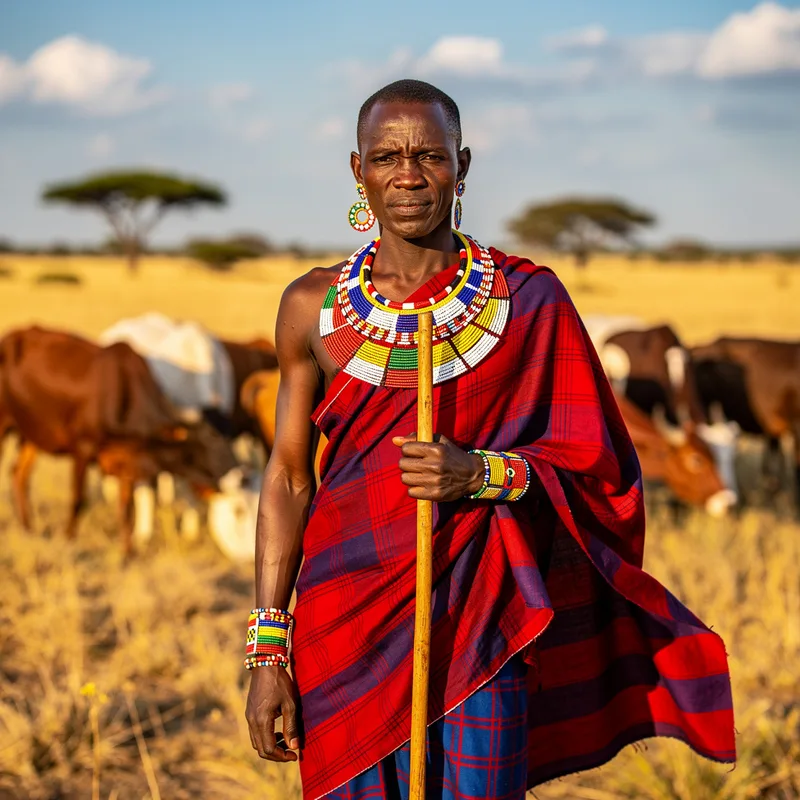
Maasai
 2
7.6

- proper noun
- /mɑːˈsaɪ/
- In the 1950s and 1960s, as Kenya's independence from British rule approached, the Maasai began to demand their lands back.
- Maasai pastoralists
- Maasai lands
- Maasai people
Examples
-
Outside, the four Maasai paid no attention to the tumult within.
Fiction book (1994) -
As pastoralists, the Maasai do not regularly hunt wild animals for food or sale.
Academic text (1996) -
"Will we not still be Maasai if we go to the new world?" asked the older boy.
Fiction book (1994) -
"Their future is here, where the Maasai have always lived."
Fiction book (1994) -
There is a bond between the Maasai and the land.
Fiction book (1994) -
Look, the Maasai people of Kenya, for example.
-
"Then he is no longer Maasai, and you can have no objection to his coming with me."
Fiction book (1994) -
For example, permanent springs, swamps, and marshes are seen by the Maasai as sacred sites.
Academic text (2007) -
Since the advent of colonialism in East Africa, the Maasai people have been progressively dispossessed of their communally held land.
Academic text (1994) -
The Maasai maintain their traditional customs while adapting to modern challenges.
Surface Forms
Etymology
Maasai comes from the name the people use for themselves, Maa, in Kenya and Tanzania. So a Maasai is a member of that community, known for raising cattle and keeping strong cultural traditions.