
Lysistrata
 1
9.9

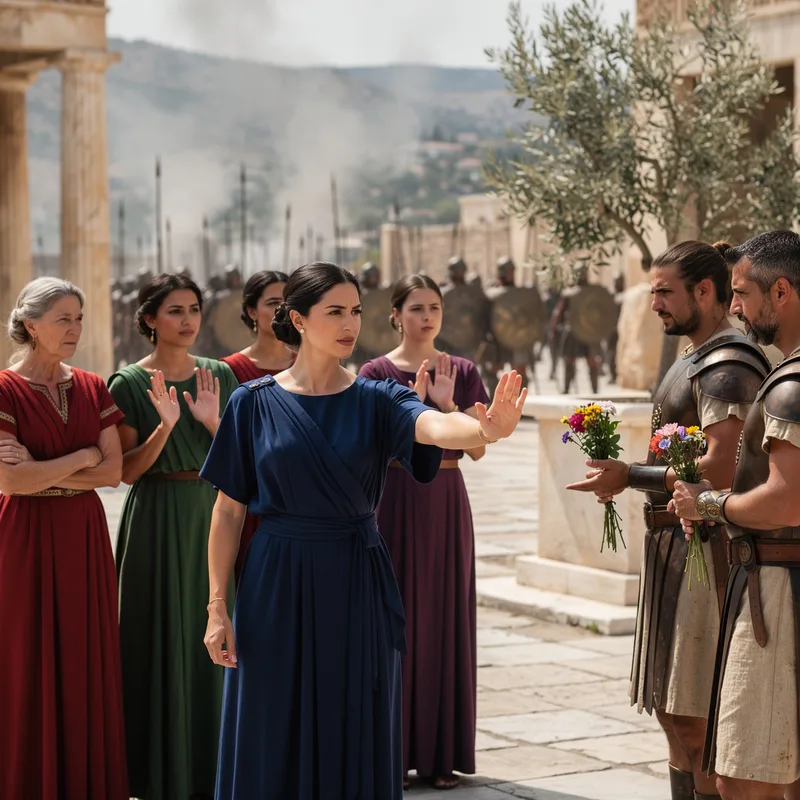
A woman who leads other women to refuse sex to stop a war
- proper noun
- /ˌlɪsɪˈstrɑːtə/
- Literature
:
Lisístrata
- The character of Lysistrata remains influential, symbolizing women's strength in advocating for justice.
Examples
-
I knew the naked heroines of Lysistrata, opulently pictured in a volume bought for 20 cents on Corn Hill, and the warm Tahiti nudes of Gauguin that gazed from the walls of the Fine Arts Museum.
Fiction book (1991) -
Lysistrata was barely visible and certainly not the woman I had brought to my college the year before, as part of Lancaster's Outreach Program.
Fiction book (2000) -
In Aristophanes' comedy, Lysistrata unites women to demand peace from warring men.
-
Many productions have adapted Lysistrata, emphasizing its themes of feminist protest and peace.
Surface Forms
Lysistrata main
Etymology
Lysistrata comes from ancient Greek parts lysis 'release' and stratos 'army'. The name means 'army-releaser' or 'she who ends armies', which matches the play's main character who leads women to force peace.