
Lysenkoism


 1
9.9
- noun
- /lɪˈzɛŋkoʊˌɪzəm/
- The devastating consequences of Lysenkoism highlighted the dangers of ignoring scientific facts for political ideology.
Examples
-
2) Human-chimpanzee hybrids are impossible, as years of failed Lysenkoism proved sufficiently; hence, there is no possibility of such; hence, the possibility of viable hybrids is a non-argument against bestiality.
Blog text (8) -
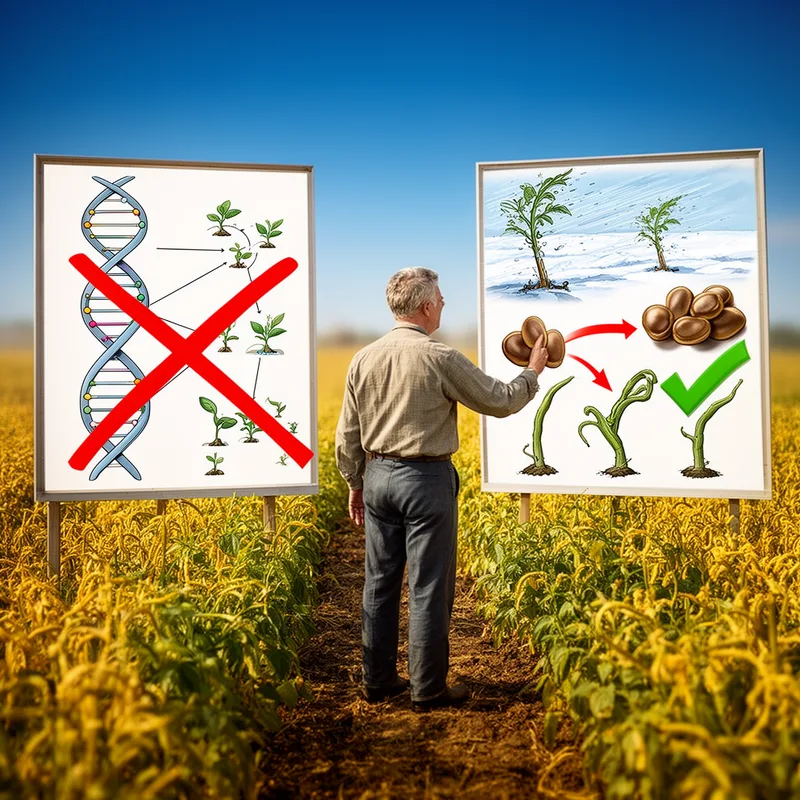
Lysenkoism was a Soviet version of Lamarck's eighteenth-century theory of the inheritance of acquired characteristics; it rejected genetic findings that conflicted with the communist ideology of environmental determinism.
Academic text (2010) -
Let's not forget the example of the Soviet Union, which lasted for decade after decade despite more than abundant evidence that its philosophical underpinnings were not only wrong, disastrous, and foolish (Lysenkoism, anyone?), but utterly murderous (Stalinism, anyone?).
Blog text (1) -
The stalls at the Vavilov Institute of Genetics, named for Russia's primary martyr to Lysenkoism, the great agronomist who died in Saratov prison in 1943, provide old pamphlets, ripped up, as substitutes.
Academic text (1992) -
Lysenkoism, which rejected modern genetics, led to widespread agricultural failure in the Soviet Union.
-
During the Stalin era, many scientists faced persecution for opposing Lysenkoism and its flawed agricultural practices.
Surface Forms
Morphology
Lysenkoism = Lysenko (semi-transparent) = Lysenko + ism
Formally transparent as an eponymic '-ism' denoting a doctrine associated with Lysenko, but the specific scientific content and implications are specialized and not derivable from the name alone.
Etymology
Lysenkoism is named after the Soviet scientist Trofim Lysenko and the -ism part means 'a belief or system', like in Buddhism or capitalism. It refers to the set of agricultural ideas he promoted that rejected modern genetics, so the name helps you remember it is his system of ideas.