
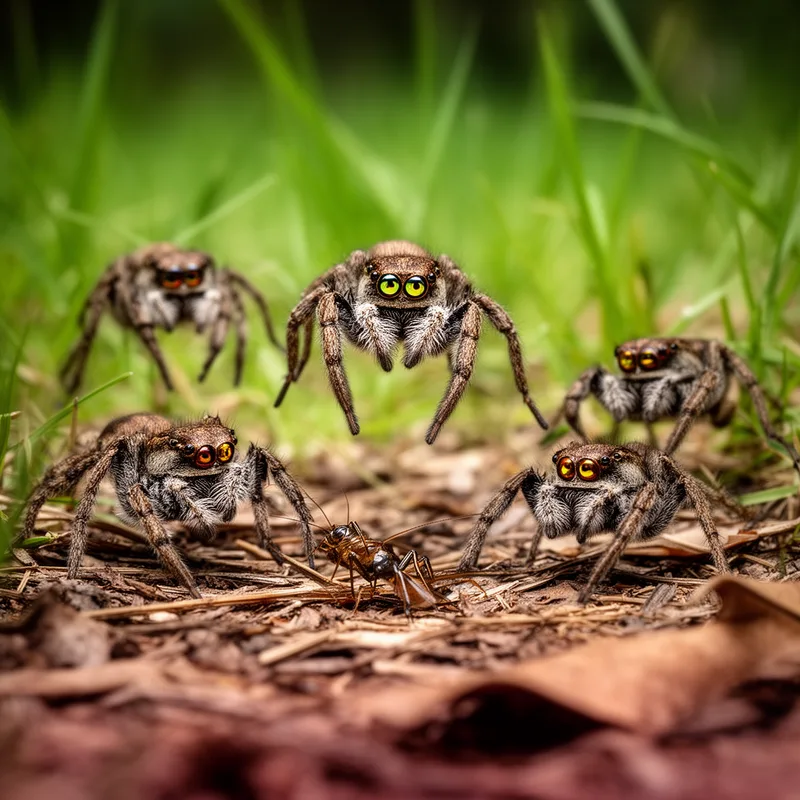
Lycosidae


 1
9.9
- noun
- /ˌlaɪkəˈsaɪdiː/
- Specialized
- In gardens, you might find a Lycosidae spider lying in wait for insects to pass by.
Examples
-
Well, because the family name is taken from the Greek word Lycosidae, or "wolf."
Blog text (28) -
The Lycosidae family includes many species that hunt their prey with remarkable speed and accuracy.
-
With their excellent eyesight, Lycosidae are able to detect movement even in low light conditions.
Synonyms
 2
6.9
A large spider that hunts on the ground and runs to catch other animals instead of using webs
Compounds
- Specialized
A group of spiders with strong bodies and very good eyesight, called wolf spiders
Surface Forms
Morphology
Lycosidae = lycos + idae
The form is a scientific taxonomic formation (combining form 'lycos-' + the family suffix '-idae'); neither element is a productive, standalone English morpheme for an average learner, so the meaning is not transparently derived.
Etymology
Lycosidae comes from the Greek word lykos, which means 'wolf', plus the animal family ending -idae. That's why these spiders are called wolf spiders: they hunt and chase their prey like wolves, so the name helps you remember they do not rely on webs.