
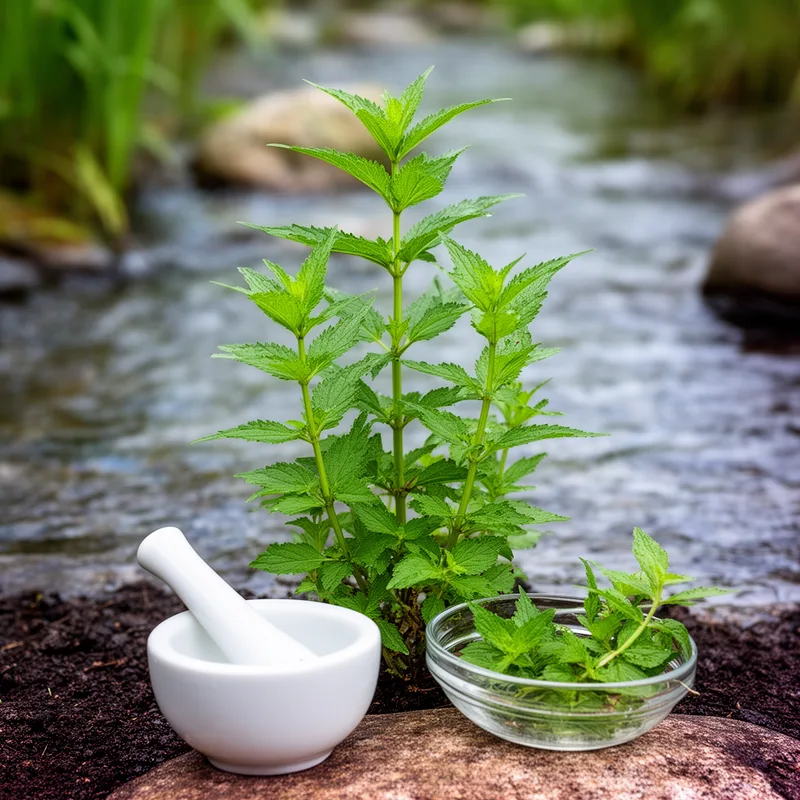
Lycopus virginicus
- noun
- Specialized
- The leaves of Lycopus virginicus have a slightly minty aroma and are occasionally used in traditional remedies.
Examples
-
Lycopus virginicus grows in damp environments along streams and marshes in the eastern United States.
-
Lycopus virginicus has small whitish flowers that attract various pollinators in its natural habitat.
-
Herbalists sometimes use Lycopus virginicus to help manage mild thyroid conditions.
-
The herbalist recommended Lycopus virginicus for its calming effects.
-
Many people use Lycopus virginicus to help with anxiety.
-
The herbal tea made from Lycopus virginicus is known for its astringent properties and mild sedation.
-
In traditional medicine, Lycopus virginicus is commonly utilized as a remedy for minor respiratory issues.
Synonyms

A small aromatic herb with whitish flowers used in herbal medicine to calm people

A small plant like mint that grows near water and smells when crushed
Surface Forms
Morphology
Lycopus + virginicus
This is a scientific binomial formed compositionally: the genus name 'Lycopus' (a small genus of herbs) combined with the specific epithet 'virginicus' (meaning 'of Virginia') yields the species 'Lycopus of Virginia' or a Virginia Lycopus herb. Botanical Latin names are literal and non-idiomatic, so a learner who knows both constituents can infer it refers to a Lycopus species from Virginia.
Etymology
Lycopus virginicus may come from Greek words meaning 'wolf' and 'foot' because the plant's leaves can look like a wolf's foot, and virginicus means 'from Virginia'. So the name gives a simple image, the 'wolf-foot' plant from Virginia, which helps you remember it is a herb that grows there.

