
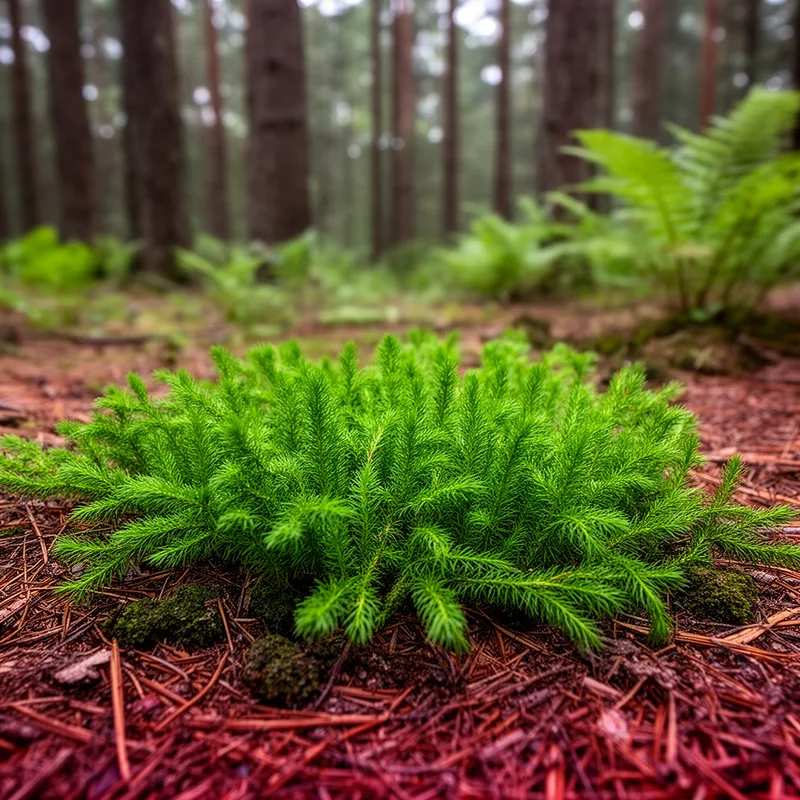
Lycopodium complanatum
- noun
- Specialized
- Botanists often refer to Lycopodium complanatum as Creeping Jenny when discussing club moss identification.
Examples
-
Lycopodium complanatum is commonly found in pine forests across northern Europe and North America.
-
In botanical studies, Lycopodium complanatum is noted for its distinctive creeping stems.
-
The dried stems of Lycopodium complanatum were once used in traditional medicine.
-
Look at Lycopodium complanatum!
-
I found a patch of Lycopodium complanatum in the forest.
-
Lycopodium complanatum commonly grows in moist, shady areas of northern temperate forests.
-
The bright green foliage of Lycopodium complanatum makes it a popular choice for ground cover in gardens.
Synonyms

A low green plant with many branching stems that look like small antlers
Surface Forms
Morphology
Lycopodium + complanatum
This is a Latin binomial (genus + species). Knowing 'Lycopodium' would allow a B1 learner to infer it refers to a type of clubmoss (partial transparency), but the species epithet 'complanatum' is not an English word and offers no clear, compositional meaning to a general learner without botanical/Latin knowledge, so the full referent is not fully predictable.
Etymology
Lycopodium complanatum may come from old Greek and Latin words that describe how the plant looks: Lycopodium means 'little wolf's foot' because the small leaves can sit like a tiny paw, and complanatum means 'flattened' because the stems lie low on the ground. So the name fits a low, creeping club moss with flat, spreading stems.

