

Luscinia megarhynchos
- noun
- Specialized
- The Luscinia megarhynchos is renowned for its sweet and powerful nocturnal song in European woodlands.
Examples
-
The Luscinia megarhynchos, often called the nightingale, is famous for its hauntingly beautiful song that fills the night air.
-
Have you ever heard a Luscinia megarhynchos at night?
-
Ornithologists often travel to hear the Luscinia megarhynchos during its spring breeding season.
-
The poem beautifully described the moonlit serenade of a Luscinia megarhynchos in the countryside.
-
The Luscinia megarhynchos sings beautifully at dusk.
-
Every spring, the male Luscinia megarhynchos sings from dusk until dawn to attract a mate.
-
In many cultures, the Luscinia megarhynchos is celebrated as a symbol of love due to its melodious night-time singing.
Synonyms
 16
4.4
16
4.4

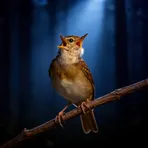
A small bird that sings beautifully at night
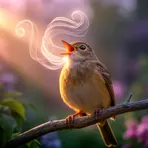
A small bird that sings a very beautiful song
Surface Forms
Morphology
Luscinia + megarhynchos
This is a Latin binomial (genus + species) rather than an ordinary English phrase, and the second element 'megarhynchos' is not a known English word or defined here, so the meaning 'nightingale' cannot be compositionally inferred by a B1 learner. Scientific names are conventionally arbitrary labels built from classical roots and are not transparently interpretable as everyday English, making this expression opaque to learners.
Etymology
The name Luscinia megarhynchos comes from Latin and Greek words. The word Luscinia means 'nightingale', and mega- + -rhynchos mean 'large beak'. So the name makes you picture a nightingale with a large beak and helps you remember this bird famous for singing at night.