
Luddite
 1
9.9
1
9.9

- noun
- /ˈlʌdaɪt/
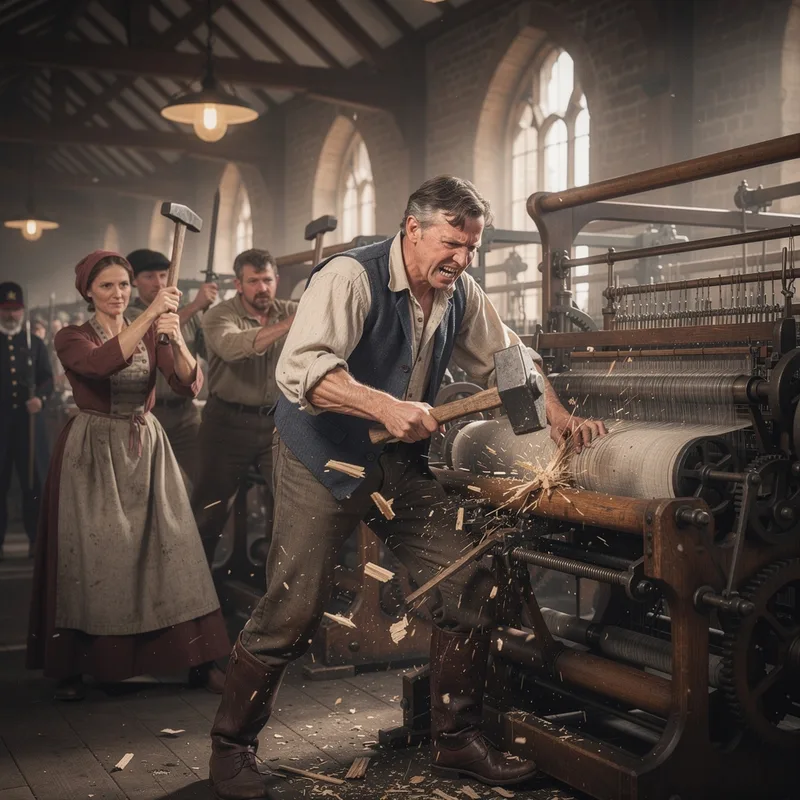
- Ironically, the Luddites were a group of English workers in the early 1800s who smashed machinery in cotton and wool mills that they figured would destroy their traditional way of working.
- Luddites smashed machines
- Luddite attacks
Loading YouTube…
Watch on YouTubeHe makes his very first virgin speech to the to to to Parliament defending the Luddites.
- He makes his very first virgin speech to the to to to Parliament defending the Luddites.
Examples
-
By 1811, Luddite attacks on machinery were widespread.
Academic text (2010) -
But the original Luddites were weavers say, were losing their jobs to power looms.
-
It's crossed my mind, something relevant for today... ...like the Luddite movement in 19th century England.
-
The Luddites put up a very good fight.
Blog text (17) -
Two hundred years ago, back when the Luddites revolted against industrialization by sabotaging mechanical looms, David Ricardo tackled the problem of automation.
Academic text (2012) -
Incidents of machine-breaking occurred in the Pentrich area in 1811-12, when this engraving was made of Luddites attacking looms in a textile factory.
Academic text (2010) -
He copied a passage from Brontë's Shirley, a novel full of class tensions about Luddite riots and destruction of machinery.
Academic text (2007) -
The original Ludites feared that machines would replace them in their textile jobs.
-
Historians often discuss the Luddites as a response to the rapid industrialization of the 19th century.
-
Being labeled a Luddite today might mean you resist using smartphones and modern technology.
Compounds

- Literature
A person who opposes new technology because they worry about its social or moral effects
How Resistant

Surface Forms
Morphology
Luddite = Ludd (semi-transparent) = Ludd + ite
Morphologically it's 'Ludd' + '-ite' meaning a follower/member of Ludd; the mechanical member sense is directly indicated by the suffix but still requires historical knowledge of the reference.
Etymology
Luddite was originally the name for members of a group in early 1800s England who destroyed factory machines to protest job loss and poor work conditions. They were called after Ned Ludd, who was said to have broken a machine, and that is why the word now means someone who 'opposes' new technology.