
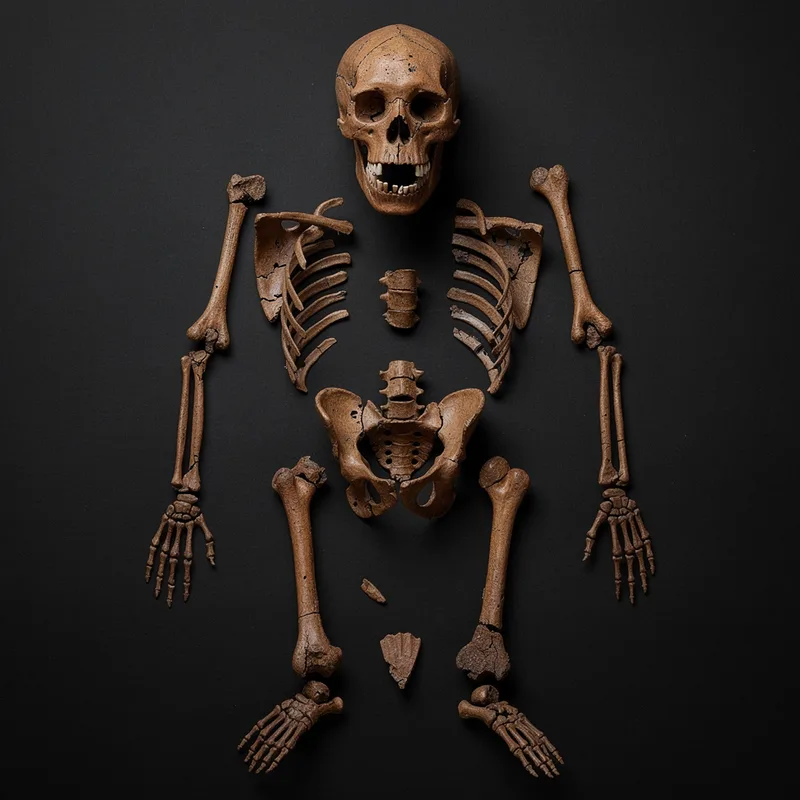
Lucy
 110
8.4
110
8.4

- proper noun
- /ˈluːsi/
- Specialized
- Typical animals hunted by Lucy would have been wild horses, woolly mammoths, reindeer, and rhinos.
- the fossil Lucy
- Lucy's skeleton
- Australopithecus Lucy
Loading YouTube…
Watch on YouTubeAnd in the case of Lucy, in the same layer, the same stratum where we found her, we found fossilized crocodile and turtle eggs.
- And in the case of Lucy, in the same layer, the same stratum where we found her, we found fossilized crocodile and turtle eggs.
Examples
-
And in the case of Lucy, in the same layer, the same stratum where we found her, we found fossilized crocodile and turtle eggs.
-
Children who visit our museum are captivated by Lucy because of her small size and relative completeness.
Academic text (1992) -
We look biologically very different from, say, from Lucy, from Australopithecus, from Homo erectus, from all these different species.
-
The discovery of Lucy has provided valuable insights into the evolution of early humans.
-
Researchers think that Lucy, an Australopithecus afarensis, lived about 3.2 million years ago.
-
Fossils of Lucy were found in Ethiopia, helping scientists understand our ancient ancestors.
Idioms

A slang name for the drug LSD that makes people see things that are not real
Surface Forms
Etymology
Lucy got her name from a popular story: the team who found the bones in Ethiopia in 1974 named the skeleton after the Beatles song 'Lucy in the Sky with Diamonds' that was playing at their camp, and soon everyone just called her Lucy. So Lucy now stands for that important early human ancestor we study to learn how people began to walk upright.