

Lower Carboniferous
- noun
- /ˈloʊər ˌkɑːrbəˈnɪfərəs/
- Specialized
- The fossils found in the Lower Carboniferous strata provide valuable information about early land plants.
Examples
-
Major geological changes occurred during the Lower Carboniferous, influencing the development of primitive amphibians.
-
Scientists estimate that the Lower Carboniferous lasted for approximately 35 million years.
-
The Lower Carboniferous was a significant period.
-
What happened in the Lower Carboniferous?
-
During the Lower Carboniferous, vast forests covered much of the land, providing habitats for early insects.
-
Fossils from the Lower Carboniferous reveal the first appearance of winged insects on Earth.
-
The Lower Carboniferous is known for its significant rise in land areas and diverse plant life.
Synonyms
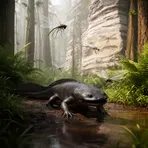
An early part of the Carboniferous when primitive winged insects and early amphibians appear

A time about 345 to 310 million years ago with many shallow seas and early marine animals

A time in Earth's past about 345 to 310 million years ago when early winged insects appear
Surface Forms
Morphology
The phrase is a straightforward composition of 'lower' (earlier/positioned below) + 'Carboniferous' (the geological period), so its meaning as the earlier subdivision of the Carboniferous is directly derivable from the parts. This adjectival naming pattern is common in scientific and cross‑linguistic usage (e.g. 'Lower Jurassic', 'Carbonífero inferior'), making it transparent to a B1 learner who knows the constituents.
Etymology
Lower Carboniferous comes from Carboniferous, meaning 'coal-bearing', and lower, meaning the earlier or bottom part of the rock layers. So it names the earlier part of the Carboniferous period when many coal layers formed and early land plants and animals lived.

