
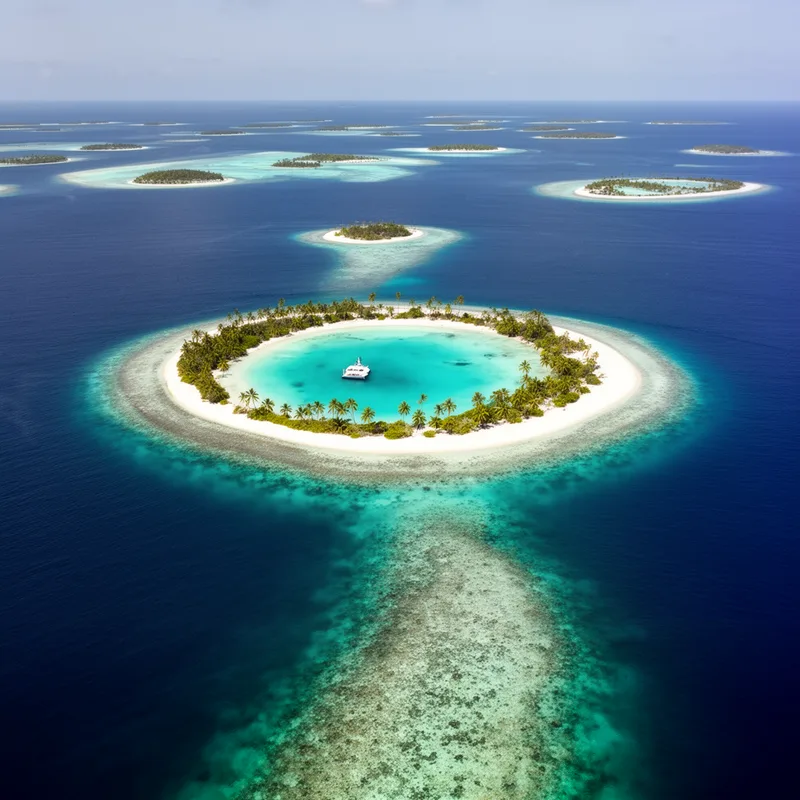
Low Archipelago
- proper noun
- The Low Archipelago is renowned for its stunning coral atolls and turquoise lagoons.
Examples
-
Tourists are often drawn to the remote beauty of the Low Archipelago for snorkeling and diving.
-
Researchers visited several islands in the Low Archipelago to study marine biodiversity.
-
The Low Archipelago consists of beautiful coral islands.
-
Have you ever visited the Low Archipelago?
-
The Low Archipelago is renowned for its stunning coral atolls and turquoise lagoons.
-
Researchers visited several islands in the Low Archipelago to study marine biodiversity.
-
Tourists are often drawn to the remote beauty of the Low Archipelago for snorkeling and diving.
Synonyms
 1
9.9
1
9.9

A group of about 80 coral atolls in French Polynesia in the central South Pacific
A group of about eighty coral islands in French Polynesia, also called the Tuamotu Archipelago
A group of about 80 coral islands in French Polynesia with clear blue lagoons
Surface Forms
Morphology
The phrase is a simple adjective + noun combination where 'low' describes the physical height and 'archipelago' denotes a group of islands; a B1 learner who knows both words can infer it refers to an archipelago of low-lying islands. As a proper name this identifies a specific group, but the meaning is transparently composed and cross-linguistically straightforward.
Etymology
Low Archipelago may come from a simple picture: the islands are very low and flat, so Low describes their height and archipelago means a 'group of islands'. So the name fits the real place, a 'group of about 80 coral islands' in French Polynesia.