
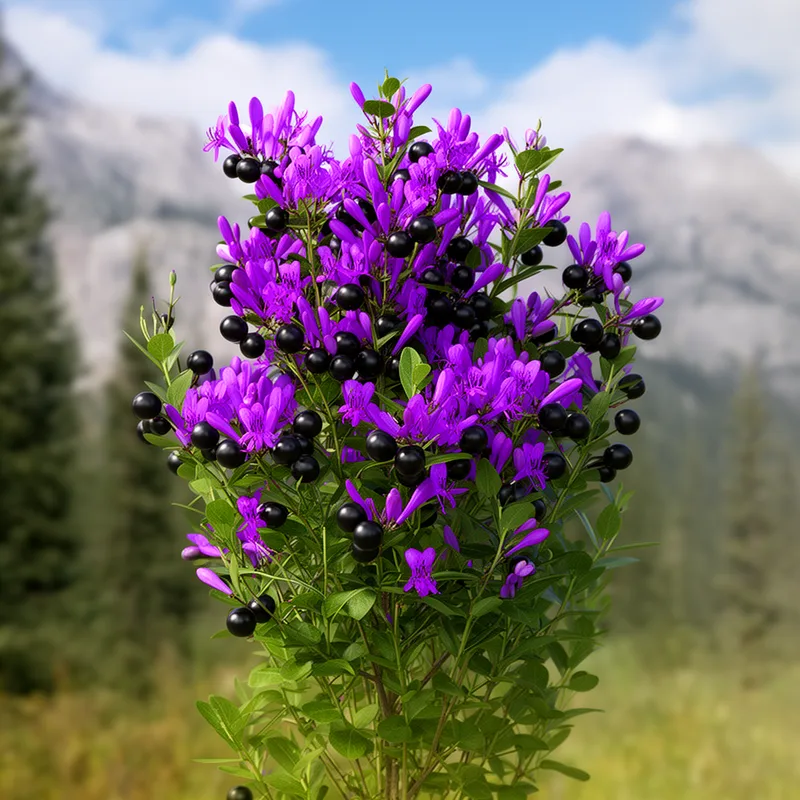
Lonicera involucrata
- noun
- /loʊˈnɪsərə ɪnˌvɒlkrəˈtɑː/
- Specialized
- Lonicera involucrata is commonly known as the bearberry honeysuckle in western North America.
Examples
-
The purple flowers of Lonicera involucrata bloom in late spring and attract pollinators.
-
The dark berries of Lonicera involucrata attract many species of birds to the area.
-
Botanists are studying how Lonicera involucrata adapts to different elevations in mountain regions.
-
The Lonicera involucrata thrives in moist, shaded areas.
-
Have you ever seen a Lonicera involucrata in bloom?
-
Lonicera involucrata is often found along streams and forests in western North America.
-
In summer, the black berries of Lonicera involucrata provide food for wildlife.
Surface Forms
Morphology
Lonicera + involucrata
This is a Latin binomial (genus + species epithet) where the species epithet 'involucrata' is not a common English word and the label functions as a taxonomic name rather than a compositional phrase. Even if a learner recognised Lonicera as honeysuckle, they would not be able to derive the specific descriptive meaning (shrubby, purple flowers, black berries) from the parts; botanical Latin and proper names are specialized and therefore opaque to a B1 learner.
Etymology
Lonicera involucrata combines a name and a Latin description: Lonicera honors a plant expert named Lonicer, and involucrata may come from a Latin word meaning 'little wrap' because the flowers sit tucked inside small leaf-like parts. This picture of flowers 'wrapped' by leaves and the dark berries helps explain why the name fits this honeysuckle species.

