
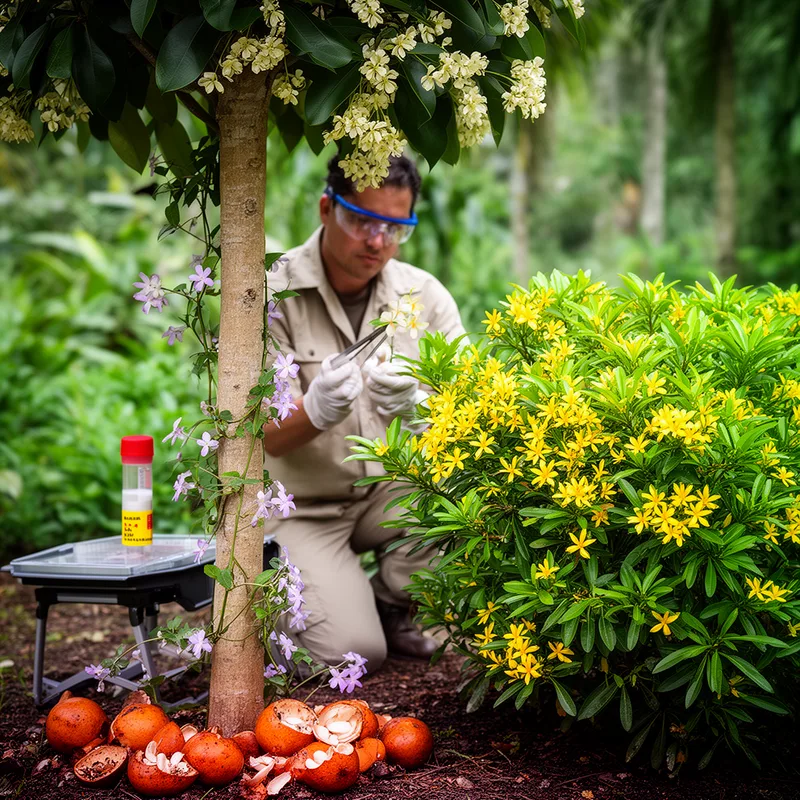
Loganiaceae


 1
9.9
- noun
- /loʊˈɡeɪniˌeɪsi/
- Specialized
- Many species within the Loganiaceae family contain alkaloids that can be toxic to humans and animals.
Examples
-
Strychnos nux-vomica, a member of the Loganiaceae, is the source of the poison strychnine.
-
The Loganiaceae are distributed primarily in tropical and subtropical regions around the world.
-
The Loganiaceae family includes several species that are known for their medicinal properties.
-
Many plants in the Loganiaceae family can be found in tropical regions.
-
Some species in the Loganiaceae family are known for their beautiful flowers and toxic properties.
-
The medicinal properties of plants from the Loganiaceae family have been studied for centuries.
-
Researchers are exploring the potential uses of Loganiaceae plants in modern pharmacology.
Surface Forms
Morphology
Loganiaceae = Logania (opaque) = Logani + aceae
The suffix '-aceae' is a specialized taxonomic marker meaning 'family' in botanical Latin and is unlikely to be transparent to an average B1 learner.
Etymology
Loganiaceae comes from the plant group name Logania, named for a person called 'Logan', plus the ending -aceae, which means 'family' in plant names. So Loganiaceae simply names the family of those flowering plants, including trees, shrubs and climbing plants, like Rosaceae is the rose 'family'.