
Loch Ness
 27
4.3

- proper noun
- /lɒk nɛs/
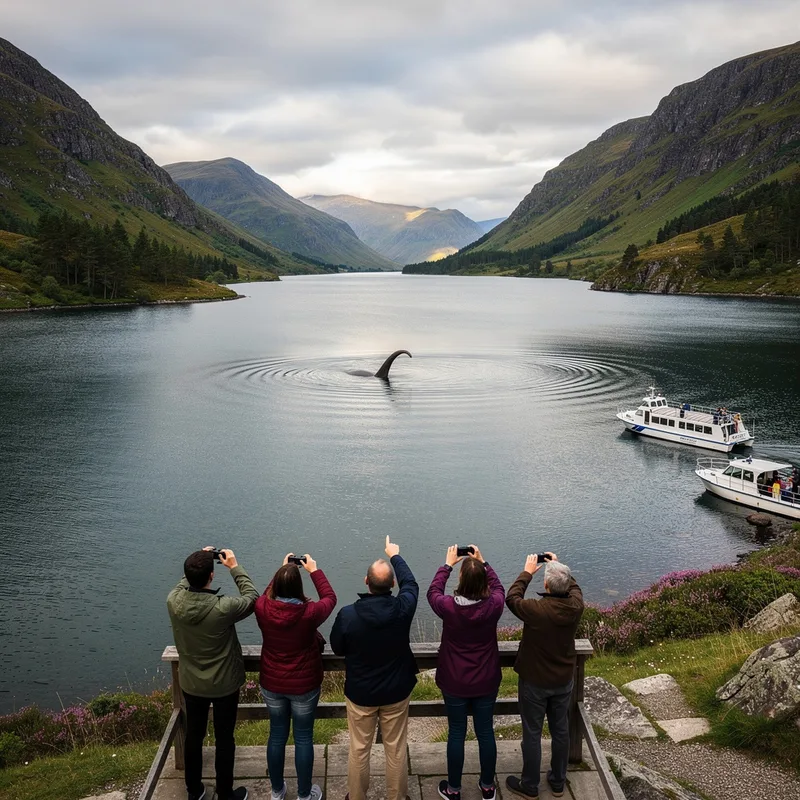
- The beautiful scenery around Loch Ness attracts photographers and nature lovers.
- Loch Ness monster
Examples
-
Loch Ness is empty, Atlantis is bunk, and I'll sleep in any haunted house in the world for five hundred bucks plus expenses.
Fiction book (1998) -
The Jag winds around Loch Ness, followed by the car.
Fiction book (1998) -
The monster's been here from Loch Ness.
Fiction book (1998) -
Roger stared out over Loch Ness in the late evening, every day for a week, fully expecting something to emerge.
Fiction book (1998) -
Many tourists visit Loch Ness every year to try and catch a glimpse of the legendary monster.
-
Several research teams have investigated Loch Ness to uncover the secrets hidden beneath its surface.
Surface Forms
Morphology
loch + Ness
The headword 'loch' clearly means a body of water (lake), and 'Ness' here functions as a proper name, so the compound denotes a specific lake called Ness. A B1 learner who knows 'loch' and recognizes 'Ness' as a name can therefore infer it refers to a particular Scottish lake; this naming pattern is cross-linguistically transparent.
Etymology
Loch Ness simply means the lake of the River Ness: Loch is the Scottish word for 'lake' and Ness is the name of the river that flows from it. That's why Loch Ness today refers to the large, deep Scottish lake famous for its scenery and its legendary monster.