
Likert


 1
7.2
- noun
- /ˈlɪkərt/
- Specialized
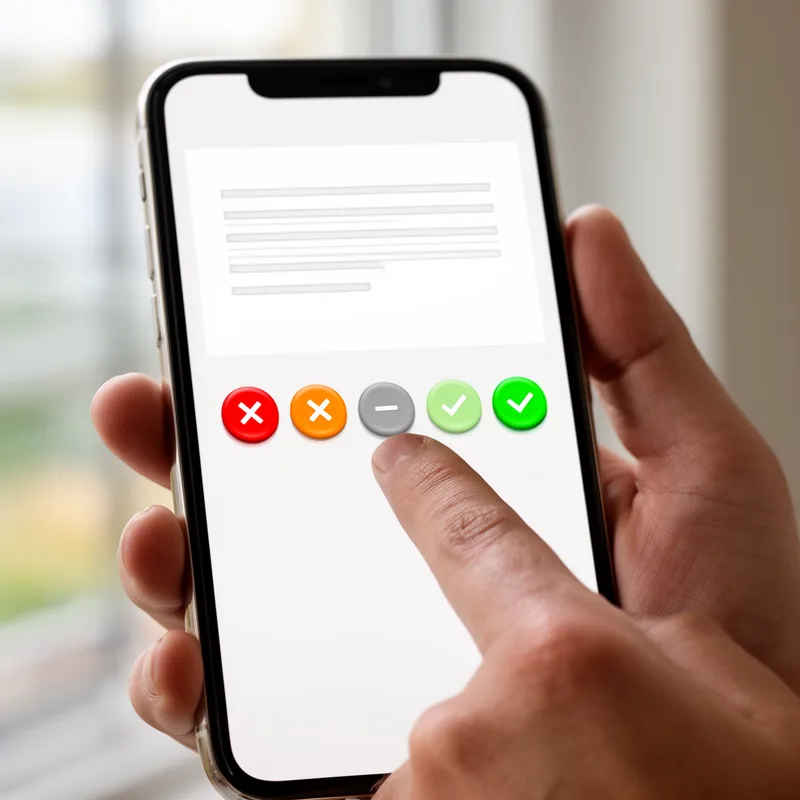
- Students answered 4 items specific to the focal course using a 5-point Likert scale.
- Likert scale
- Likert item
- Likert rating
Examples
-
Responses were made with a 5-point Likert scale (1 = strongly disagree, 5 = strongly agree).
Academic text (1999) -
All items were measured on a five-point Likert-type scale anchored with "strongly disagree" and "strongly agree."
Academic text (1999) -
The teacher rates the target student on a 7-point Likert scale for each item.
Academic text (1999) -
The handwritten and online surveys included Likert-like questions, each with five response options.
Academic text (2011) -
Participants responded to the item on a Likert-type scale, where 1 was strongly disagree and 5 was strongly agree.
Academic text (2011) -
Each item used a 5-point Likert-type scale as the response format.
Academic text (1999) -
Responses from strongly agree to strongly disagree on a 5-point Likert scale were solicited.
Academic text (1999) -
The survey consisted of 28 items that the preservice teachers rated on a 4-point Likert scale.
Academic text (2011) -
Each of the attitudinal items was measured on a 5-point Likert scale (strongly agree to strongly disagree).
Academic text (1999) -
Participants rated their level of satisfaction with the program using a 5-point Likert scale, ranging from "strongly agree" to "strongly disagree."
Surface Forms
Etymology
Likert is the name of a survey scale named after Rensis Likert, an American psychologist who created it. He used choices like 'strongly agree' to 'strongly disagree', so a Likert scale now means a list of agreement options used to measure opinions.