
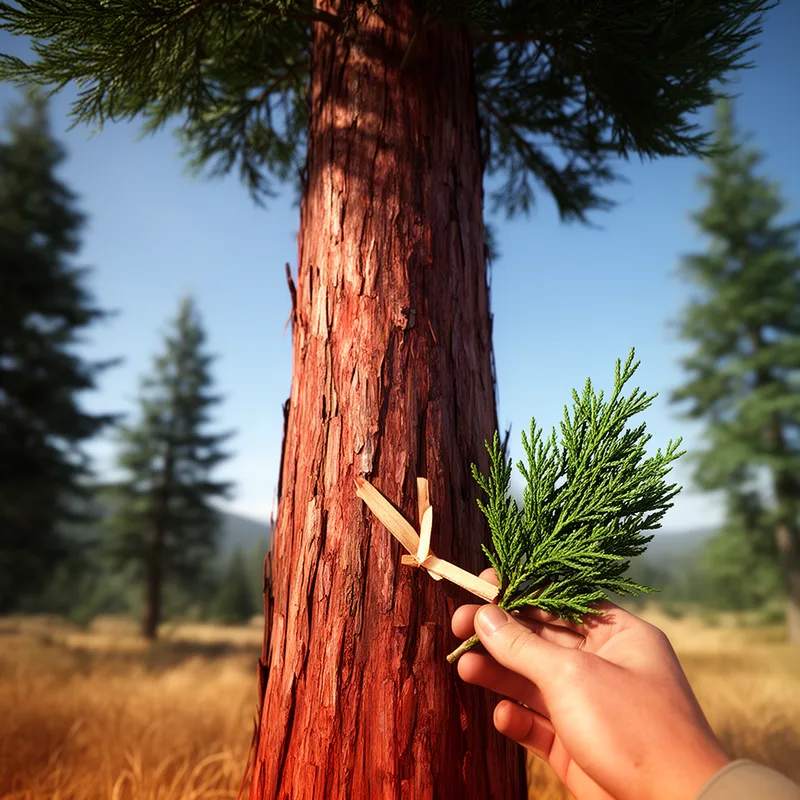
Libocedrus decurrens
- noun
- /ˌlaɪboʊˈsiːdrəs dɪˈkɜːrənz/
- Specialized
- The Libocedrus decurrens is prized for its aromatic wood and attractive, red-brown bark.
Examples
-
Many parks in California feature mature Libocedrus decurrens specimens for their shade and beauty.
-
Botanists often study the foliage of Libocedrus decurrens to compare it with other cypress relatives.
-
The Libocedrus decurrens grows well in coastal areas.
-
Many gardeners prefer Libocedrus decurrens for its aromatic foliage.
-
In California, the tall Libocedrus decurrens provides excellent shade for park visitors.
-
The Libocedrus decurrens is known for its unique cinnamon-red bark and cypress-like foliage.
-
Many landscapers choose Libocedrus decurrens for its beauty and adaptability in coastal gardens.
Synonyms

A tall evergreen tree with red-brown bark, called incense cedar

A tall evergreen tree with a pleasant smell and strong reddish wood
Surface Forms
Morphology
Libocedrus + decurrens
This is a Latin scientific binomial functioning as a proper name: even if a learner knows 'Libocedrus' as a type of tree, the species epithet 'decurrens' is a Latin/technical element (here not found in the learner dictionary) and does not yield a predictable English meaning. The phrase as a whole names a particular tree species and requires botanical or lexical knowledge rather than compositional inference, so a B1 learner would not reliably derive its meaning from the parts.
Etymology
Libocedrus decurrens may come from old words that describe the tree. The first part, Libocedrus, may mean 'fragrant cedar' because the wood smells like incense, and the second part, decurrens, means 'running down' and likely shows how some leaves seem to run down the stem, so the name helps us picture a scented cedar with downward leaves.

