
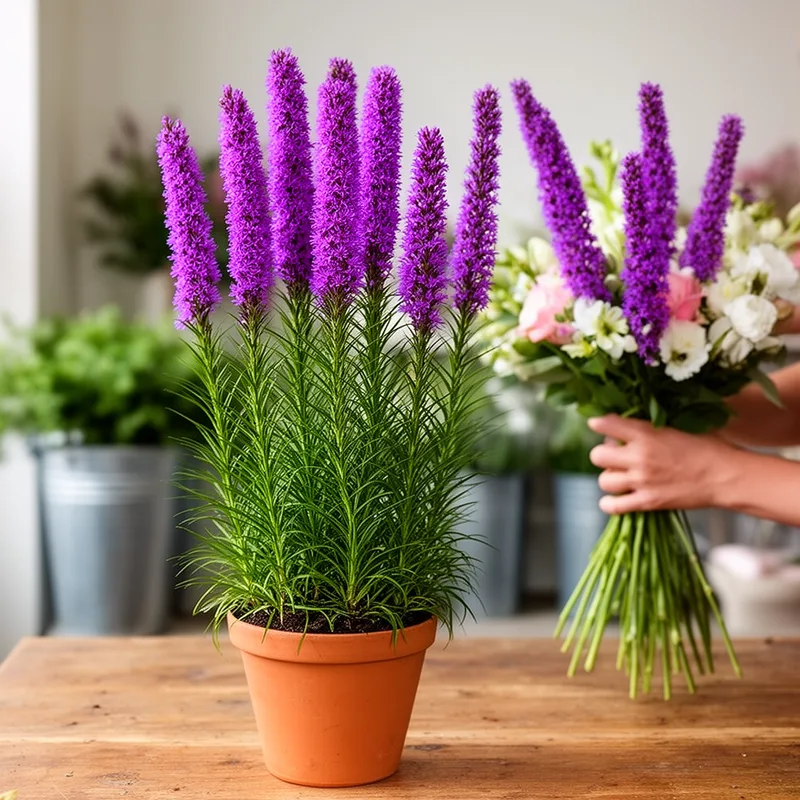
Liatris pycnostachya
- noun
- /ˈlaɪətrɪs pɪkˈnɒstəkə/
- Specialized
- Florists prize Liatris pycnostachya for its long stems and dense flower clusters, making it ideal for bouquets.
Examples
-
Gardeners often plant Liatris pycnostachya to attract butterflies and create striking floral displays.
-
The tall Liatris pycnostachya stood out in the wildflower garden with its vivid purple spikes.
-
Look at the stunning Liatris pycnostachya in full bloom!
-
The garden featured beautiful Liatris pycnostachya plants.
-
Florists prize Liatris pycnostachya for its long stems and dense flower clusters, making it ideal for bouquets.
-
Gardeners often plant Liatris pycnostachya to attract butterflies and create striking floral displays.
-
The tall Liatris pycnostachya stood out in the wildflower garden with its vivid purple spikes.
Synonyms

A tall plant with many close purple flower spikes used in flower arrangements
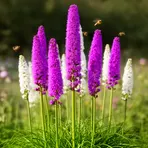
A tall plant from North America that has long spikes of purple or white flowers

A plant with tall stems and bright purple flowers
Surface Forms
Morphology
Liatris + pycnostachya
This is a scientific Latin binomial (a proper name) rather than an ordinary English phrase; its meaning (a particular species of Liatris with dense flower spikes) depends on specialized botanical knowledge and Greek/Latin roots. The second element 'pycnostachya' is not a common English word and its components are unlikely to be recognisable to a B1 learner, so the overall meaning cannot be reliably derived from the parts.
Etymology
Liatris pycnostachya comes from Greek words that describe the plant's look. The parts pycno- and -stachya mean 'dense' and 'spike', so the name shows the plant's tight purple flower spikes and helps you remember it.

