
Lepiotaceae
- noun
- /ˌlɛpiˈoʊteɪsiˌi/
- Specialized
- The cap and stalk of mushrooms in Lepiotaceae are usually easily separated.
Examples
-
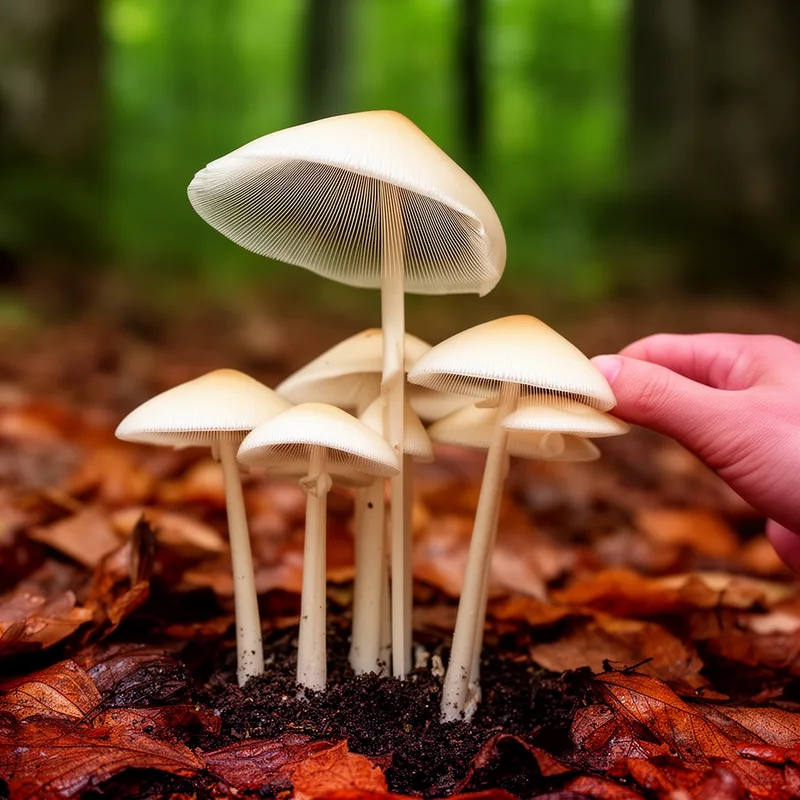
Mushrooms in the Lepiotaceae family have free gills that distinguish them from other fungi.
-
Some varieties within Lepiotaceae are edible, while others are highly toxic.
-
Members of the Lepiotaceae family are often found in leaf litter in forests.
-
The Lepiotaceae family includes several edible mushrooms.
-
Some species of Lepiotaceae are known for their delicate flavor.
-
Many species of Lepiotaceae can be found growing in grassy areas during the summer.
-
The Lepiotaceae family is notable for mushrooms with caps that easily detach from their stalks.
Surface Forms
Morphology
Lepiotaceae = Lepiota (opaque) = Lepiota + aceae
Formed by adding the specialized taxonomic suffix '-aceae' to a genus name; the family-level meaning is domain-specific and not predictable for average learners.
Etymology
Lepiotaceae comes from the mushroom genus Lepiota, which itself comes from the Greek root lepis meaning 'scale', and the ending -aceae that marks a 'family'. So, the name points to the scaly caps many of these mushrooms have and shows they belong to the same family of fungi.

