
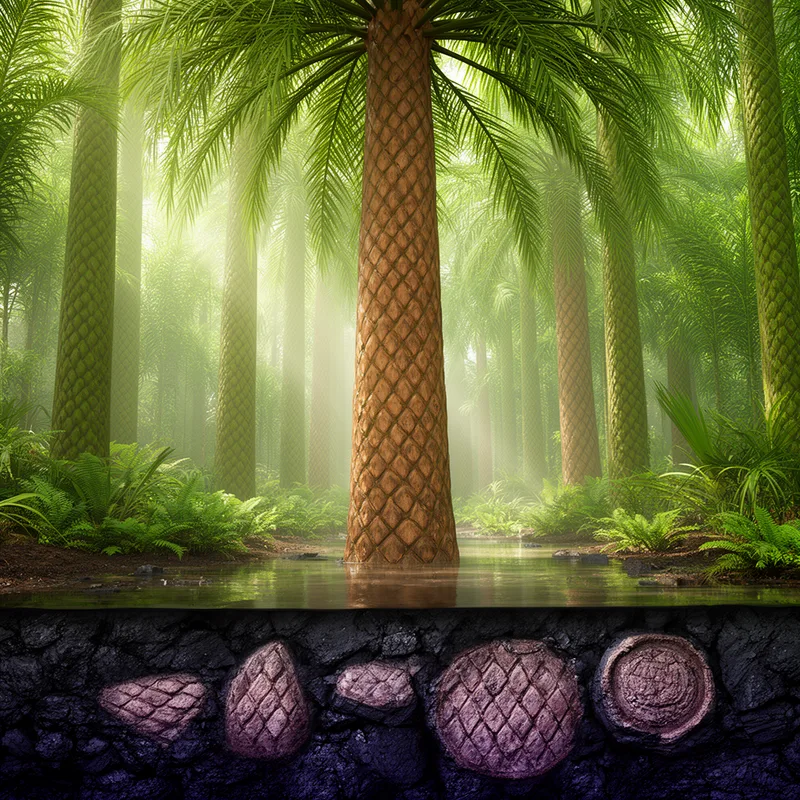
Lepidodendrales
- noun
- /ˌlɛpɪdoʊˈdɛntrəliz/
- Specialized
- The massive trunks of Lepidodendrales sometimes exceeded a meter in diameter.
Examples
-
Fossil remains of Lepidodendrales are commonly found in Carboniferous coal beds.
-
The Lepidodendrales thrived during the Carboniferous period.
-
Some paleobotanists specialize in studying the structure and evolution of Lepidodendrales.
-
Many fossils of Lepidodendrales have been discovered in North America.
-
Fossil remains of Lepidodendrales are commonly found in Carboniferous coal beds.
-
The massive trunks of Lepidodendrales sometimes exceeded a meter in diameter.
-
Many fossils of Lepidodendrales have been discovered in North America.
Surface Forms
Morphology
Lepidodendrales = Lepidodendron (opaque) = lepidodendron + ales
Formed by adding the specialized taxonomic suffix '-ales' to the genus name 'Lepidodendron'; this is a technical Latinized formation not transparently meaningful to general learners.
Etymology
Lepidodendrales comes from Greek parts: lepido- meaning 'scale' and -dendron meaning 'tree'. These plants had bark with scale-like marks, so the name means 'scale trees' and fits these large, now-extinct, tree-like plants.

