
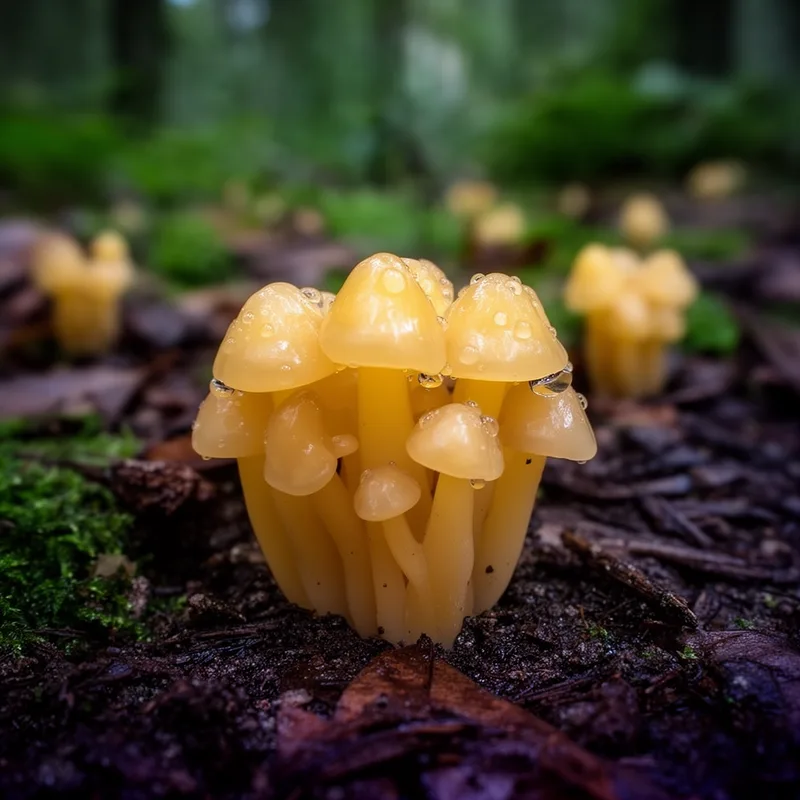
Leotia lubrica
- noun
- Specialized
- Mycologists often refer to Leotia lubrica as the jelly baby fungus due to its texture.
Examples
-
Clusters of Leotia lubrica appeared after the heavy rain, glistening in the undergrowth.
-
The slimy caps of Leotia lubrica were easy to spot along the damp forest floor.
-
I found a cluster of Leotia lubrica in the forest.
-
Have you ever seen Leotia lubrica growing in the wild?
-
After the rain, I noticed clusters of Leotia lubrica sprouting up between the leaves in the forest.
-
Known for its jelly-like appearance, Leotia lubrica is often found thriving in damp woodland areas.
-
During our nature walk, we spotted several bright yellow clusters of Leotia lubrica near the old oak tree.
Synonyms


 1
7.9
A soft, jelly-like growth on dead wood that some people eat
Surface Forms
Morphology
Leotia + lubrica
This is a taxonomic Latin binomial (genus + species) composed of non-English lexical items; a B1 learner who 'knows' the constituent forms would not be able to derive the meaning 'a small gelatinous fungus' from them. The elements are proper names/Latin roots (not transparent English morphemes), and recognizing any latent root meaning (e.g., lubric- = slippery) requires specialist or Latin knowledge beyond B1, so the expression is not predictable from its parts.
Etymology
The fungus Leotia lubrica gets its name from its jelly-like look: small, rubbery caps that grow together like little blobs. People often call it 'jelly baby' because the tiny, soft caps look like little sweets, and the second word lubrica comes from a Latin word meaning 'slippery', which explains its wet, slimy feel.