
Leo the Great


 1
7.4
- proper noun
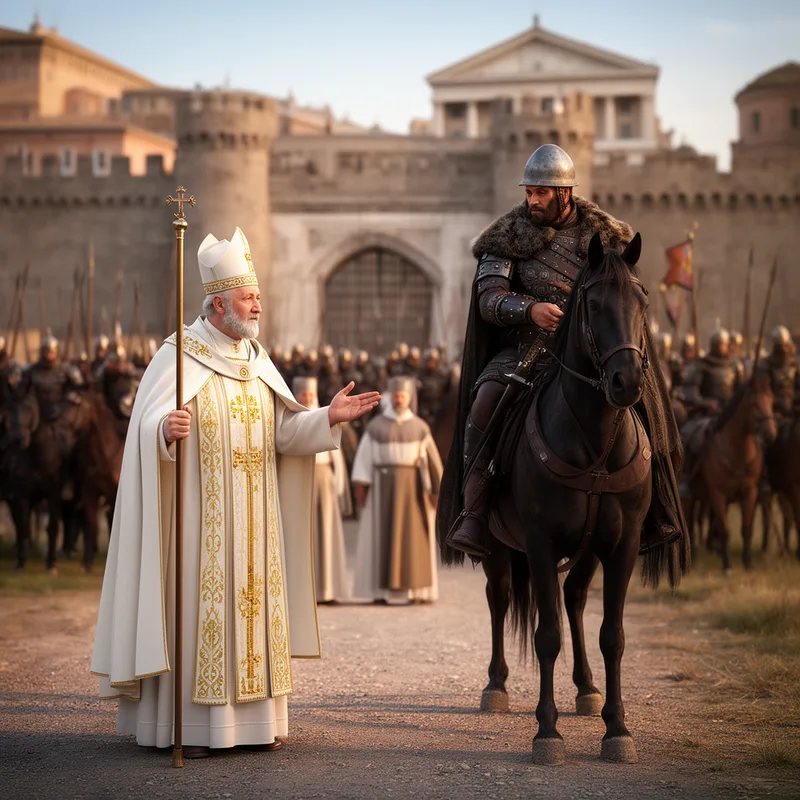
- The intervention of Leo the Great prevented Attila the Hun from sacking Rome.
Examples
-
Many historians regard Leo the Great as one of the most influential early popes.
-
Leo the Great's writings shaped church doctrine for centuries.
-
Pope Leo the Great was a significant figure in early Christianity.
-
Did Leo the Great really convince Attila the Hun to spare Rome?
-
Leo the Great played a crucial role in defining the authority of the papacy during his reign.
-
Historians celebrate Leo the Great for his diplomatic efforts that helped save Rome from invasion.
-
The writings of Leo the Great have influenced Christian theology for generations.
Synonyms
 1
9.6
Pope from 440 to 461 who convinces Attila the Hun not to attack Rome
An Italian pope in the 400s who strengthened the pope's power and persuaded Attila not to attack Rome
Surface Forms
Morphology
Leo + the + great
The construction 'Name + the Great' transparently signals an honorific: a person called Leo who is notable or distinguished, and learners who know 'the' and 'great' will infer it denotes a famous individual. However, the specific reference to Pope Leo I and the historical details (Pope, dates, actions) are encyclopedic and not derivable from the words alone, so the full, specific meaning is not predictable without prior knowledge.
Etymology
Leo the Great is the name of a 5th-century pope who helped make the pope's power stronger and, in one famous story, persuaded Attila the Hun not to attack Rome. That's why people called him 'the Great', because they wanted to show respect for his strong leadership.