
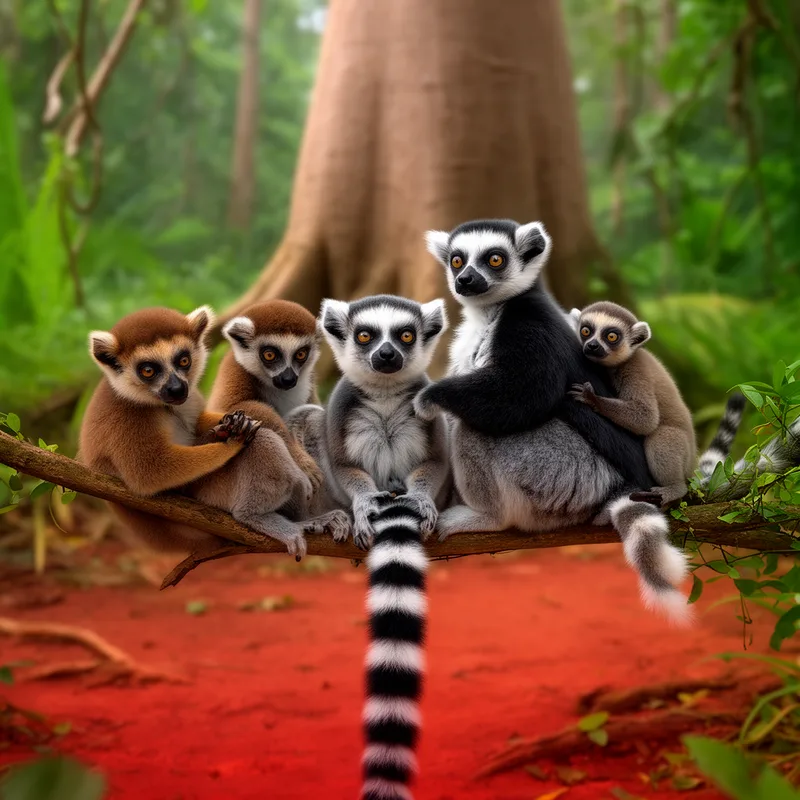
Lemuridae
- noun
- /ˌliːmʊˈrɪdeɪ/
- Specialized
- The Lemuridae are unique to the island of Madagascar, where they play crucial ecological roles.
Examples
-
Conservation efforts are vital to protect the Lemuridae family, which relies on the unique habitats of Madagascar.
-
Scientists have discovered several new species within the Lemuridae during recent expeditions.
-
Modern members of the Lemuridae family exhibit a range of social behaviors.
-
The Lemuridae family includes various species of lemurs.
-
Did you know that Lemuridae are only found in Madagascar?
-
The Lemuridae family is known for its diverse species, such as the ring-tailed lemur, found only in Madagascar.
-
Researchers study the Lemuridae to better understand primate evolution and biodiversity in Madagascar.
Synonyms

 37
4.2

A small animal like a monkey with big eyes and a long furry tail from Madagascar
A group of primates found only in Madagascar that includes typical lemur species
Compounds
- Specialized
A group of primates found only in Madagascar that includes typical lemur species
Surface Forms
Morphology
Etymology
Lemuridae comes from lemur, a Latin word meaning 'ghost' or 'spirit', because early scientists thought these animals, active at night with big eyes and strange calls, seemed ghostlike. The ending -idae is a scientific ending meaning 'family', so Lemuridae simply means the 'lemur family' of primates from Madagascar.