
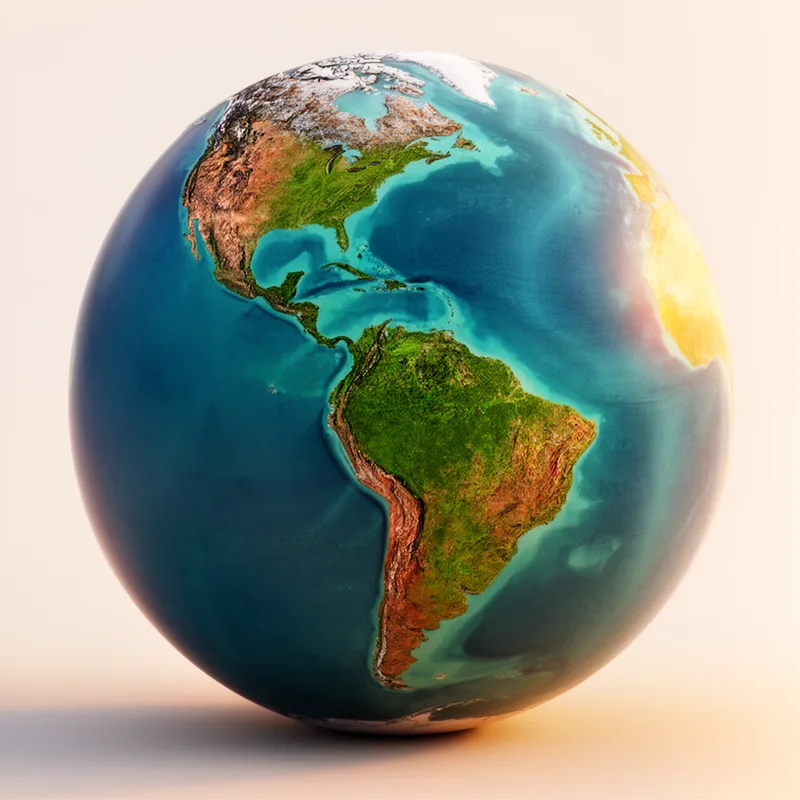
Latin America
 10
2.2
10
2.2

- proper noun
- /ˈlætɪn əˈmɛrɪkə/
- Throughout Latin America, people speak mainly Spanish and Portuguese, shaping the region's identity.
- elsewhere in Latin America
- rest of Latin America
Loading YouTube…
Watch on YouTubeWe, we, we got, we're going to Latin America later this year to open in Mexico.
- We, we, we got, we're going to Latin America later this year to open in Mexico.
- Colombia was the most unequal country in the whole of Latin America with the exception of Haiti.
- In Mexico City you have one of the biggest police forces in Latin America, more than you know.
- How did this come about, your kind of music foray in Latin America?
- For I've had my colleagues who served in third world posts, maybe in Africa or Latin America.
- Turbans, by law, women had to cover their head, not just in Brazil but all Latin America.
- And even the Hispanics, large number of Hispanics vote for Trump even though he's targeting immigrants in Latin America.
- OK, since this is for Latin America, maybe I can and do one more button.
- Everybody who's Latino geography is from Latin America, basically Mexico down South.
- We have seen that the GDP of Latin America in the Caribbean has increased.
- I mean, Latin America, very popular Latin America, like China.
- You have a United States, the Monroe Doctrine, we're going to take over Latin America is ours.
Examples
-
Latin American Civilization is a survey of both historical and contemporary issues related to Latin America.
Academic text (2011) -
We have seen that the GDP of Latin America in the Caribbean has increased.
-
In Mexico City you have one of the biggest police forces in Latin America, more than you know.
-
Meanwhile, in the last few years, things have, of course, not been standing still in Latin America.
Academic text (1997) -
The Catholic Church is not the only game in town in Latin America or South America.
-
Assistant Secretary of State for Latin America.
-
In that context, one may ask what role sport has played within Latin America.
Academic text (1992) -
The "lessons" from Latin America's experience are mainly negative: what to avoid.
Academic text (1998) -
The history of Rocinha, currently the largest shantytown in Latin America, has yet to be written.
Academic text (1997) -
Colombia was the most unequal country in the whole of Latin America with the exception of Haiti.
Surface Forms
Morphology
The phrase is directly compositional: 'Latin' (relating to Romance-language cultures) qualifying 'America' (the Americas) yields the regions of the Americas where Romance languages are spoken. This logic is transparent and supported cross-linguistically (e.g. Spanish 'América Latina'), so a B1 learner who knows both constituents can infer the meaning.
Etymology
Latin America was a name made in the 1800s for the parts of the Americas where people speak languages that come from Latin, like Spanish and Portuguese. That's why today Latin America means the countries in the Americas where people speak those 'languages from Latin'.