

Landsknecht
- noun
- /ˈlændsˌknaɪxt/
- Archaic
 :
lanzknecht
:
lanzknecht
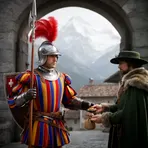
- The Landsknecht marched bravely into battle wearing his colorful uniform.
- German Landsknecht
Examples
-
The Landsknecht fought bravely in the battle.
-
Historians study the tactics used by the Landsknecht in early modern warfare.
-
A Landsknecht was often recognized by his elaborate clothing and large sword.
-
Many Landsknechts were hired by various princes.
-
The Landsknecht was known for his colorful clothing and mercenary skills in battles during the 15th century.
-
Many armies relied on the bravery and strategic prowess of the Landsknecht, making them a formidable force in Europe.
-
Historical records show that a Landsknecht could earn a significant wage, highlighting the demand for mercenary soldiers at the time.
Synonyms


 1
9.9
1
9.9
A guard who carries a long pole weapon with an axe and point
 1
9.9
1
9.9
A soldier from Scotland or Ireland who fought for pay in medieval times
An old word for a person from Switzerland often hired as a soldier
Surface Forms
Etymology
Landsknecht comes from the German parts land ('land' or 'country') and knecht ('servant' or 'soldier for hire'), and it was the name for German foot soldiers hired to fight in the 15th and 16th centuries. So it means a kind of mercenary soldier.