
Lancastrian
- adjective
- /læŋˈkæstrɪən/
 :
lancastriano
:
lancastriano
- "One can imagine a Lancastrian noble saying, 'I have to have a gun,' and even if he couldn't get a good one, he might have had one made that was of inferior quality, cast by nonexperts, or perhaps one the manufacturer was passing off as high quality."
Examples
-
The Lancastrian supporters rallied behind their leader during the fierce battles of the Wars of the Roses.
-
Built by a son of Henry III, it was later owned by John of Gaunt and became a Lancastrian stronghold during the "Wars of the Roses."
Academic text (1999) -
Meanwhile, Gloucester repeated Oxford's manoeuvre, attacking the Lancastrian left and pushing Exeter's troops back.
-
Meanwhile, Gloucester repeated Oxford's manoeuvre, attacking the Lancastrian left and pushing Exeter's troops back.
-
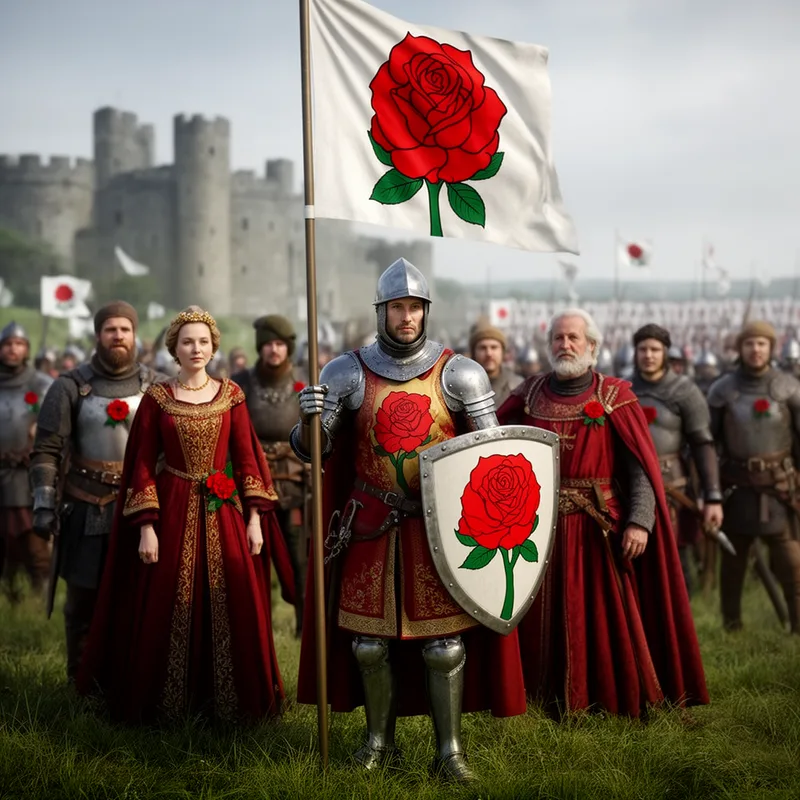
During the conflict, a Lancastrian flag was symbolically raised to represent their claim to the throne.
-
Historians often discuss the strategies employed by Lancastrian forces to gain the upper hand in numerous skirmishes.
Compounds

An English royal family that ruled from 1399 to 1461 and used a red rose as their symbol
Surface Forms
Morphology
Etymology
Lancastrian as an adjective comes from Lancaster and the ending -ian and was used for things connected to the House of Lancaster, such as armies or leaders. So when we call something 'Lancastrian' in history, we mean it belongs to or supports that royal house.

