
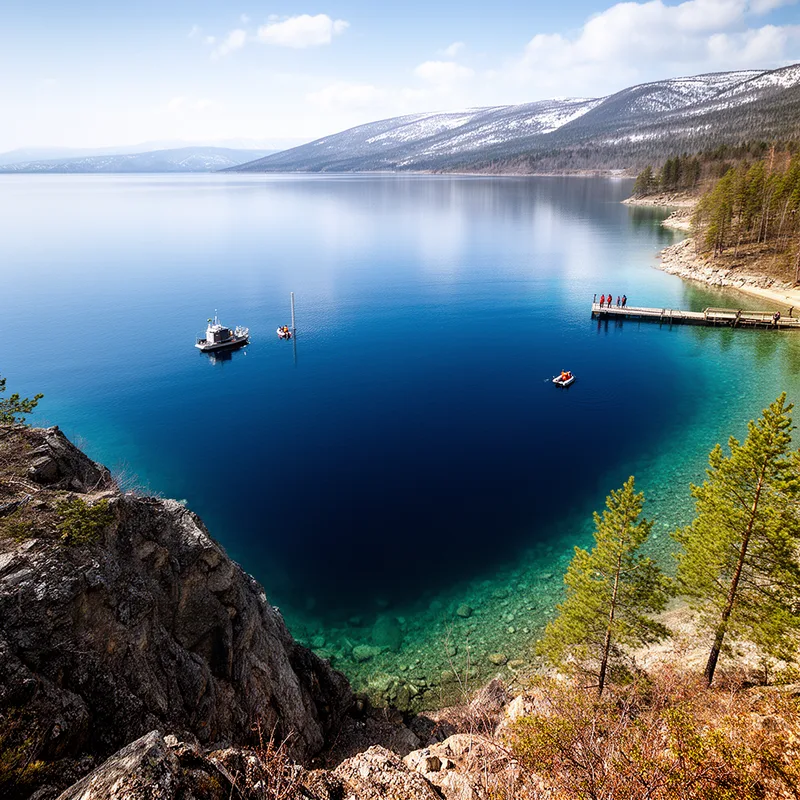
Lake Baikal
 2
4.8

- proper noun
- As a unique ecosystem with exceptionally high degrees of biological diversity and endemism, Lake Baikal was designated a UNESCO World Heritage Site.
- Lake Baikal amphipods
Examples
-
Rikhvanova is one of the founders and is still a key leader of the movement to save Lake Baikal.
-
I believe we are about 500 kilometers north of Lake Baikal.
-
I believe we are about 500 kilometers north of Lake Baikal.
-
Lake Baikal is similar to a polar region in terms of its average temperature and the high level of dissolved oxygen in its water column.
Academic text (2018) -
Lake Baikal, the largest and deepest freshwater lake on Earth, had long been noted for its remarkable purity.
Academic text (1992) -
Lake Baikal lay sheathed in winter ice thick enough to drive across.
Synonyms
 3
7.2
A very large fresh water lake in southern Siberia, Russia, and the deepest in the world
Surface Forms
Morphology
The form 'Lake Baikal' is a straightforward toponym built from the generic noun 'lake' plus a proper name 'Baikal', so a B1 learner who knows both words will understand it denotes a lake called Baikal even if they lack detailed knowledge about it. This naming pattern (Lake + name) is compositional and cross-linguistically common, making the MWE transparent.
Etymology
Lake Baikal may come from old local words meaning 'rich' or 'many waters'. People long ago called it a 'rich lake' because it holds so much fresh water and is very deep.