

Lady with the Lamp
- proper noun
- During the Crimean War, Florence Nightingale became known as the Lady with the Lamp for her nightly rounds caring for soldiers.
Examples
-
Many people refer to Florence Nightingale as the Lady with the Lamp because of her compassion and dedication.
-
The legacy of the Lady with the Lamp continues to inspire generations of nurses around the world.
-
The Lady with the Lamp is a symbol of compassion and care.
-
Have you heard about the Lady with the Lamp?
-
During the Crimean War, Florence Nightingale became known as the Lady with the Lamp for her nightly rounds caring for soldiers.
-
Many people refer to Florence Nightingale as the Lady with the Lamp because of her compassion and dedication.
-
The legacy of the Lady with the Lamp continues to inspire generations of nurses around the world.
Synonyms
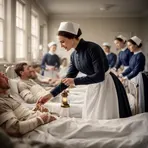
An English nurse known for starting modern nursing and often used as a name for a very caring person
Surface Forms
Morphology
The phrase is compositionally understandable as 'a woman with a lamp' from the constituents, so its literal sense is transparent; however the specific MWE meaning—an epithet referring to Florence Nightingale—is a cultural/historical reference that cannot be predicted from the words alone. Because learners can grasp the literal image but not the encyclopedic referent without prior exposure, this is only partially transparent.
Etymology
Lady with the Lamp comes from Florence Nightingale's habit of walking through hospitals at night with a small lamp to check on wounded soldiers. One popular story says the quiet lady and her light comforted many people, so the phrase came to mean 'Florence Nightingale' and 'care for the sick'.

