

Labridae
- noun
- /ˈlæbrɪˌdeɪ/
- Specialized
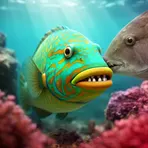
- The Labridae family of fish is known for its vibrant colors and is commonly found in warm tropical waters.
Examples
-
In particular, Gobiidae and Labridae were identified as the most recurrent families in the coastal environment in all areas, where enhanced trophic conditions occur due to the presence of higher chlorophyll-a concentration, i.e., higher nutrients from land or from upwelling and subsequent higher primary production.
Academic text (2018) -
Gobiidae and Labridae also showed the highest density and frequency of occurrence in the coastal zone of the Gulf of Sirte, while no Centracanthidae larvae were found in this bathymetric region.
Academic text (2018) -
The analysis of the taxa composition of the assemblages allowed us to identify and compare the main patterns occurring in the three study areas. Gobiidae and Labridae characterized the larval assemblages of the coastal zone in each region.
Academic text (2018) -
Taking into account the mean density of these families, the Strait of Sicily diverged from the other regions, showing extremely high mean density of Centracanthidae, Gobiidae, and Labridae compared with the low values found in the other two study areas (Supplement 1b).
Academic text (2018) -
Many species of Labridae can be seen swimming among the coral reefs of the Caribbean Sea.
-
The bright hues of the Labridae fish make them a popular choice for marine aquarium enthusiasts.
Synonyms
 2
9.4

A brightly colored sea fish with thick lips and strong teeth
Surface Forms
Etymology
Labridae comes from the old genus name Labrus for wrasses and the ending -idae, which scientists use to mean 'family'. A helpful way to remember it is to picture the bright reef fishes with strong, often puckered 'lips' that many wrasses have, because Labridae is the family of those colorful reef fishes.