
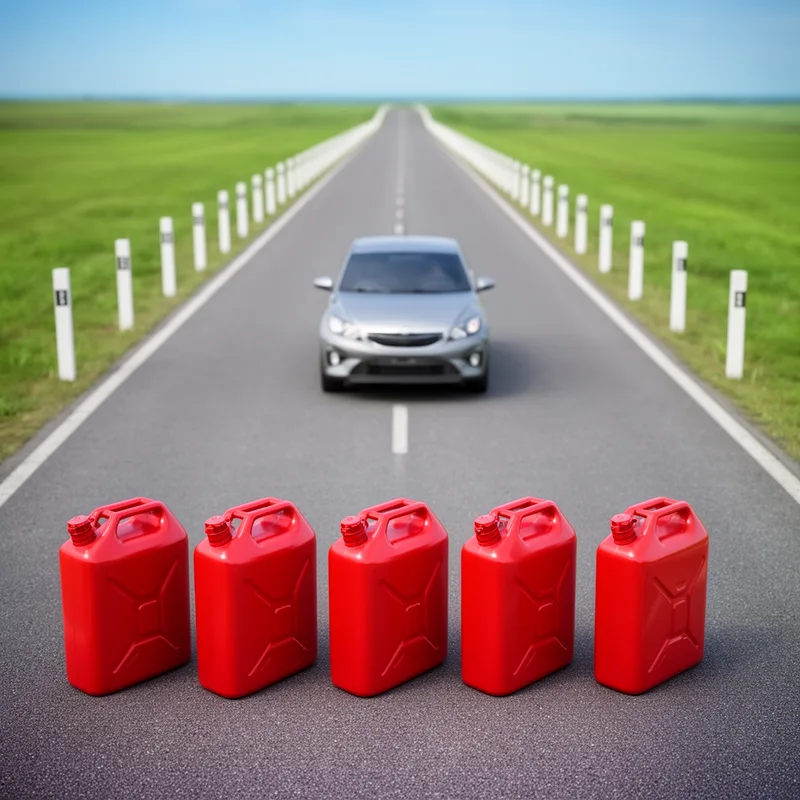
L/100 km
- noun
- Australian
- The new hybrid car boasts a fuel efficiency of just 4 L/100 km on the highway.
Examples
-
With a consumption rate of 7 L/100 km, this model is considered quite economical for its class.
-
Many European countries report vehicle fuel consumption using the L/100 km standard rather than miles per gallon.
-
The car has a fuel efficiency of L/100 km.
-
With a rating of 5 L/100 km, this vehicle is very economical.
-
Many European countries report vehicle fuel consumption using the L/100 km standard rather than miles per gallon.
-
The new hybrid car boasts a fuel efficiency of just 4 L/100 km on the highway.
-
With a consumption rate of 7 L/100 km, this model is considered quite economical for its class.
Synonyms



 1
3.9
1
3.9
Amount of fuel a vehicle like a car uses for a certain distance or time

How many liters of fuel a car uses to drive 100 kilometers
Surface Forms
Morphology
L/100 + km
This is a transparent unit expression: it reads as liters per 100 kilometres and is directly derivable from the constituent units and the numeric/per notation (L, 100, km, and the slash meaning ‘per’). The composition follows a standard, cross-linguistic measurement convention rather than an idiomatic or metaphorical sense, so a learner who knows the unit symbols and basic numeric/per notation will understand it.
Etymology
The measure L/100 km comes from a simple idea: it shows how many liters (L) of fuel a car uses to drive 100 kilometers (100 km). Because using 100 km gives easy numbers to compare, L/100 km became the usual way to show 'fuel consumption'.