
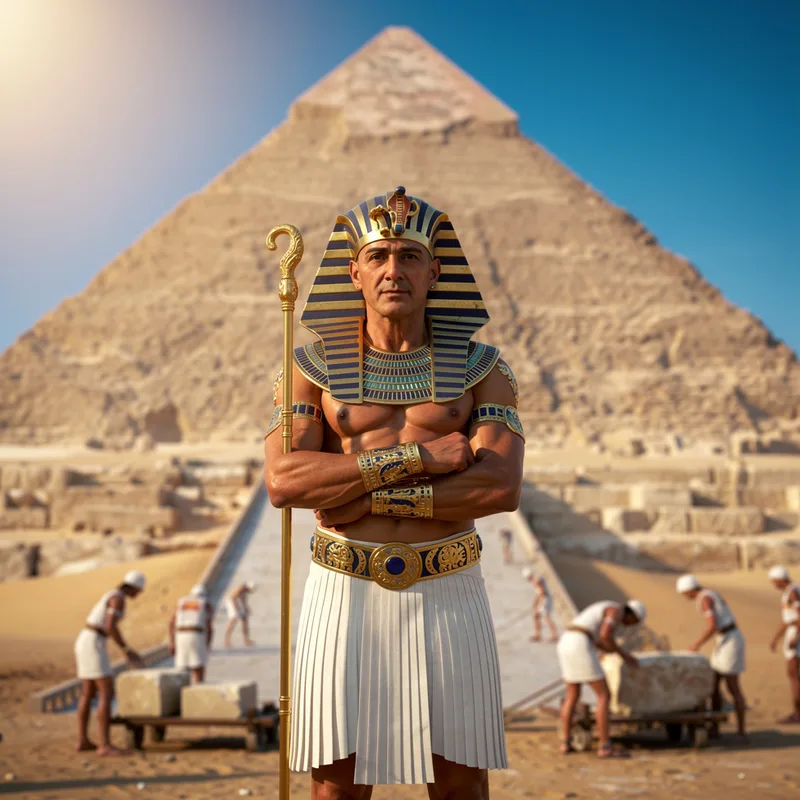
Khufu
 2
9.9

- proper noun
- PHOTO (COLOR): This small ivory figurine is the only known depiction of the pharaoh Khufu, builder of the Great Pyramid.
- Khufu's pyramid
- pharaoh Khufu
Loading YouTube…
Watch on YouTubeAnd the next day, lo and behold, he found with red ochre paint Khufu's name in hieroglyphs up in the upper relieving chambers of the pyramid.
- And the next day, lo and behold, he found with red ochre paint Khufu's name in hieroglyphs up in the upper relieving chambers of the pyramid.
- Here there were three ancestral Sabach to Khufu, that is, mother worms.
- The reason for that door is because Khufu's soul needed to open the door to reach the heavens, and you need a door.
Examples
-
Many historians study Khufu to understand the achievements of ancient Egyptian civilization, particularly his role in pyramid construction.
-
From the beginning, Hemienu planned three burial chambers to ensure that whenever Khufu died, a burial place would be ready.
Academic text (2007) -
And so then Senefru's son Khufu builds his Great pyramid.
-
The final wander on our list, Khufu's Great Pyramid is the oldest and only one to survive.
-
We know who built the Great Pyramid: the pharaoh Khufu, who ruled Egypt about 2547-2524 B.C.
Academic text (2007) -
I, Hamar, Lord High Priest of Egypt... am preparing a chronicle of the reign of Khufu, ruler of Egypt.
-
Photo (color): A triangular notch two-thirds of the way up the northeast edge of the Great Pyramid of Khufu may hint at how the Egyptians constructed this royal tomb more than 4,500 years ago.
Academic text (2007) -
Khufu commissioned the construction of the Great Pyramid, which still stands today as a marvel of ancient engineering.
-
As the Pharaoh Khufu ruled Egypt, he became known for building the Great Pyramid at Giza, a testament to his legacy.
Synonyms
 3
9.9
An Egyptian king about 2600 BC who built the Great Pyramid at Giza
Surface Forms
Etymology
Khufu is the ancient Egyptian name of the pharaoh the Greeks called Cheops. A helpful way to remember it is to think of the Great Pyramid at Giza, because Khufu was the ruler who ordered its construction.