
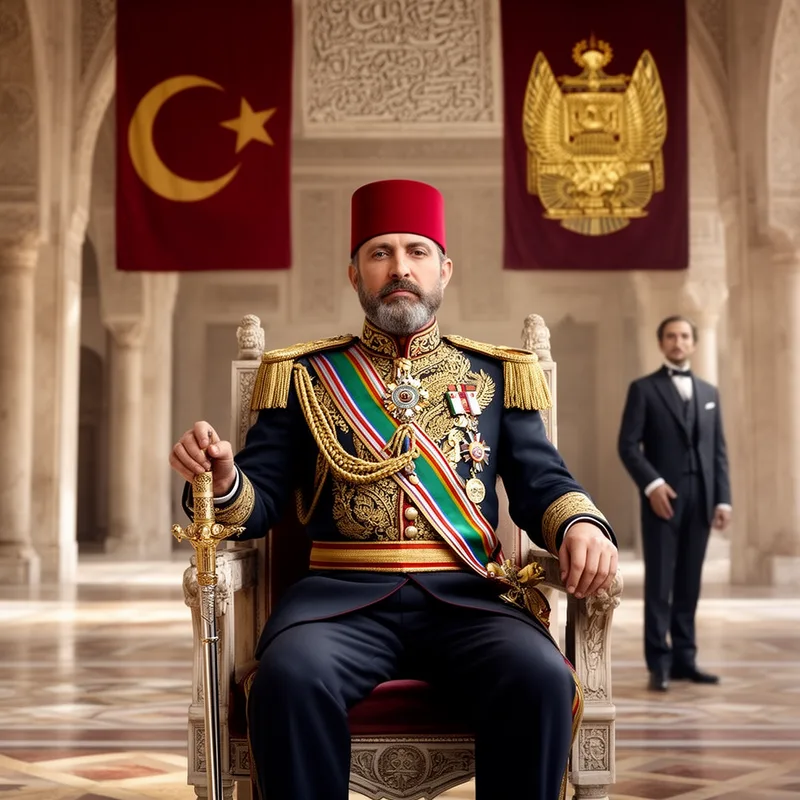
Khedive


 1
9.9
- noun
- /kəˈdīv/
- The Khedive of Egypt ruled during a time of significant change and modernization between 1867 and 1914.
- Khedive Ismail
Examples
-
In Egypt, Ibsen's first visit to Egypt was in 1869, two years after finishing PG, when he was a member of the Scandinavian delegation invited by the Khedive to celebrate the opening of the Suez Canal.
Academic text (1995) -
Even the Khedive was appalled.
-
General Gordon goes to Khartoum... as Governor General for the Khedive.
-
Under Khedive Ismail, over a tenfold increase in the educational budget further expanded the requisite resources for culture producers.
Academic text (2002) -
The Khedive also supported academic journals, including Rawdat al-madaris, that aided the spread of science and scholarship among Egyptians.
Academic text (2002) -
Three days ago, the tour group met for the first time in the old wing of the Mena Palace, the 19th-century hunting lodge of the Khedive Ismail Pasha set at the foot of the Giza plateau.
Academic text (2010) -
The pleas of Muhammad Ali's great-grandson, the Khedive Tewfik, who detested the Egyptian government of the time, were another pretext for a British bombardment of the city and the landing of British forces.
Academic text (2010) -
As the Khedive, he was responsible for overseeing the administration of Egypt under Ottoman authority.
-
Under the leadership of the Khedive, the construction of the Suez Canal was a major achievement for Egypt.
Synonyms
 4
9.9
A senior government or army official in the Ottoman Empire
Surface Forms
Etymology
Khedive comes from Ottoman Turkish and Arabic words like khidiv that mean 'lord' or 'ruler', used for a high-ranking official. So a Khedive was the Egyptian viceroy and the country's top governor under the Ottoman Empire.