
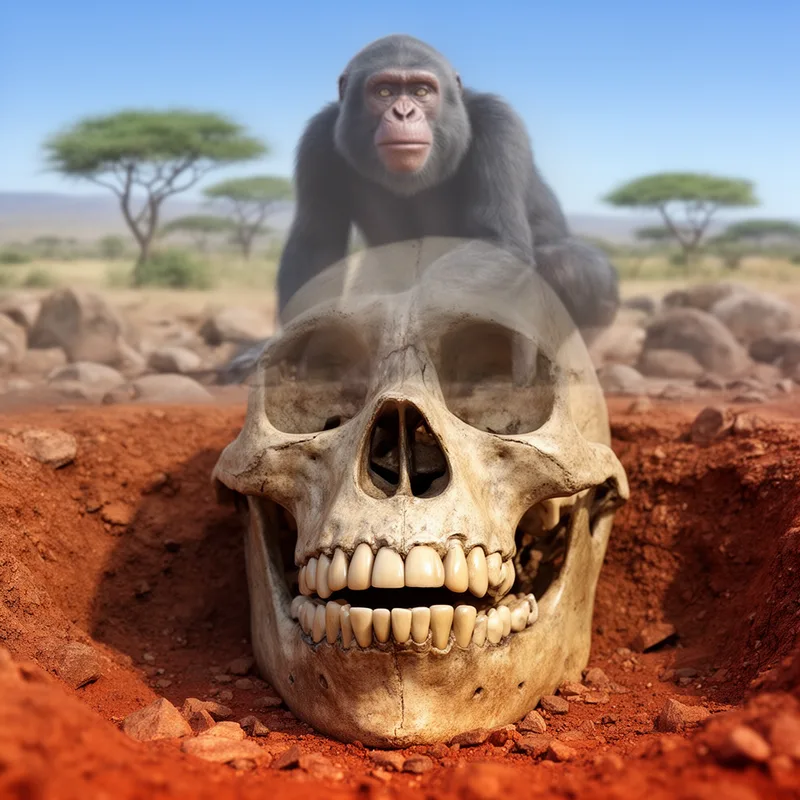
Kenyapithecus
- noun
- /ˌkɛnjəˈpɪθɪkəs/
- Specialized
 :
Kenyapithecus
:
Kenyapithecus
- The extinction of Kenyapithecus marks a significant point in the history of primate evolution in Africa.
Examples
-
Fossils of Kenyapithecus were discovered in the Miocene deposits of eastern Africa.
-
Scientists believe that Kenyapithecus had a diet requiring powerful jaws and robust molars.
-
The discovery of Kenyapithecus provided important clues about primate evolution.
-
The Kenyapithecus fossils were discovered in Kenya.
-
Researchers are studying Kenyapithecus to understand primate evolution.
-
Fossils of Kenyapithecus have provided valuable insights into the evolution of early primates.
-
Paleontologists have identified several characteristics of Kenyapithecus, including its large molars adapted for chewing tough vegetation.
Surface Forms
Morphology
Etymology
The word Kenyapithecus comes from Kenya and the Greek root pithecus 'ape', so it literally means 'ape from Kenya'. This is a handy way to remember that it is a fossil ape found in Kenya with large back teeth called molars and strong jaws for heavy chewing.

